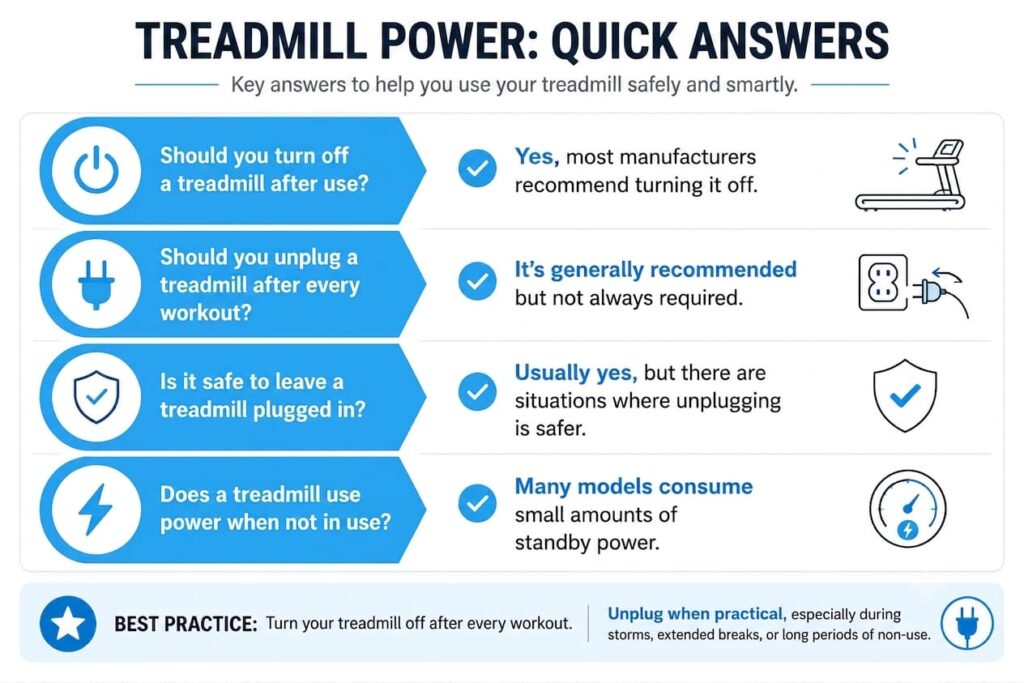
Most treadmill manufacturers recommend turning off or unplugging your treadmill after use to reduce power consumption, improve safety, and help protect sensitive electronics from power surges.
While leaving a treadmill plugged in is unlikely to cause immediate damage, turning it off when you’re finished can help extend the machine’s lifespan and reduce unnecessary risks.
In this guide, you’ll learn when you should unplug your treadmill, when it’s okay to leave it plugged in, and what major treadmill brands recommend.
- Do Treadmill Manufacturers Recommend Unplugging Your Treadmill?
- Why Manufacturers Recommend Turning Off Your Treadmill
- Is It Safe to Leave a Treadmill Plugged In?
- Does Leaving a Treadmill Plugged in Damage It?
- Does a Treadmill Use Electricity When Not in Use?
- How to Properly Turn Off a Treadmill
- The Best Practice: Turn Off Your Treadmill After Every Workout
- Related Questions
Do Treadmill Manufacturers Recommend Unplugging Your Treadmill?
Most treadmill manufacturers recommend turning off your treadmill after each workout and unplugging it when it won’t be used for a while. While the exact advice may vary slightly between brands and models, the general goal is to improve safety and help protect the machine’s electronics.
Here’s what some popular brands typically recommend:
- NordicTrack: Turn the treadmill off after use and unplug it before cleaning, maintenance, or extended storage.
- ProForm: Similar to NordicTrack, with recommendations to unplug the machine when not in use for extended periods.
- Reebok: Advises powering down the treadmill after workouts and unplugging it before servicing or moving the machine.
- BH Fitness: Recommends unplugging before maintenance and during long-term storage.
If you’re comparing brands, our guide to NordicTrack vs ProForm treadmills explores their key differences. You can also browse our roundup of the best treadmills in Australia to see how today’s leading models compare.
Why Manufacturers Recommend Turning Off Your Treadmill
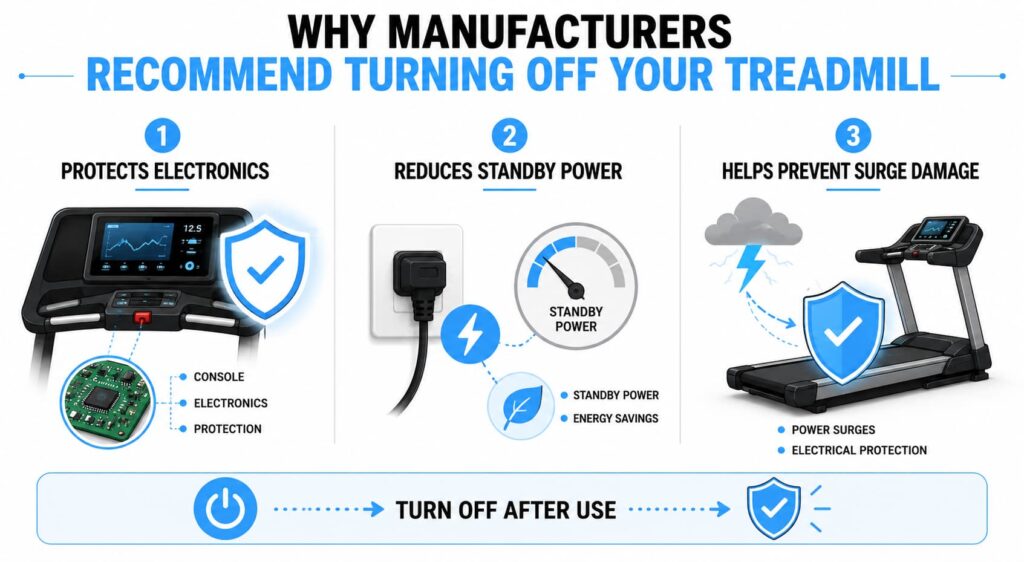
Most treadmill manufacturers recommend turning off your treadmill after each workout for the following reasons.
1. To Protect Sensitive Electronics
Modern treadmills contain several electronic parts that can be affected by power surges or electrical faults, including:
- Console displays
- Touchscreens
- Motor control boards
- Internal circuitry
Turning the treadmill off when you’re finished helps reduce wear on these components over time.
2. To Reduce Standby Power Consumption
Even when a treadmill isn’t being used, it may still draw a small amount of electricity.
This is known as phantom power draw. While the amount is usually small, turning the machine off can lead to long-term energy savings.
3. To Help Prevent Power Surge Damage
Power surges can happen unexpectedly and may damage sensitive electronics. Common causes include:
- Electrical spikes
- Lightning-related surges
- Unexpected power fluctuations
Turning off or unplugging your treadmill can provide an extra layer of protection against these events.
Is It Safe to Leave a Treadmill Plugged In?
In most cases, yes, it is safe to leave a treadmill plugged in. Many people do this, especially if they use their treadmill regularly.
It’s usually fine when:
- You use the treadmill daily.
- It’s connected to a surge protector.
- Your home has a stable electrical system.
However, to be safe, consider unplugging it:
- During thunderstorms
- Before extended holidays
- If it won’t be used for several weeks
- Before moving the machine
- During electrical work at home
Taking these simple precautions can help protect your treadmill and reduce the risk of electrical damage.
Does Leaving a Treadmill Plugged in Damage It?
In most homes, leaving a treadmill plugged in won’t cause immediate damage. Under normal conditions, the short-term risk is very low. However, there are some long-term factors to consider, like:
- Exposure to power surges
- Gradual wear on electronic components
- Small amounts of standby power usage
Many treadmill owners leave their machines plugged in, especially if they use them regularly. Frequent users often find this more convenient.
On the other hand, occasional users commonly unplug their treadmills between workouts for added protection and peace of mind.
While leaving your treadmill plugged in isn’t likely to significantly shorten its life, protecting it from power surges and following basic maintenance practices can help maximise its lifespan.
If you’re curious about what to expect from your machine over the years, see our guide on how long treadmills last for a closer look at the factors that affect durability and performance.
Does a Treadmill Use Electricity When Not in Use?
Yes, many treadmills use a small amount of electricity even when you’re not exercising. This is called phantom power or standby power. Modern treadmills often keep parts of the console active, allowing features such as displays, clocks, or quick-start functions to remain ready for use.
Typical standby power consumption is usually quite low, often only a few watts. While this won’t have a major impact on your electricity bill, the cost can add up over time if the treadmill stays plugged in year-round.
If you’d like a closer look at energy use and running costs, check out our guide on how much electricity a treadmill uses, including estimated power consumption for different treadmill types.
How to Properly Turn Off a Treadmill
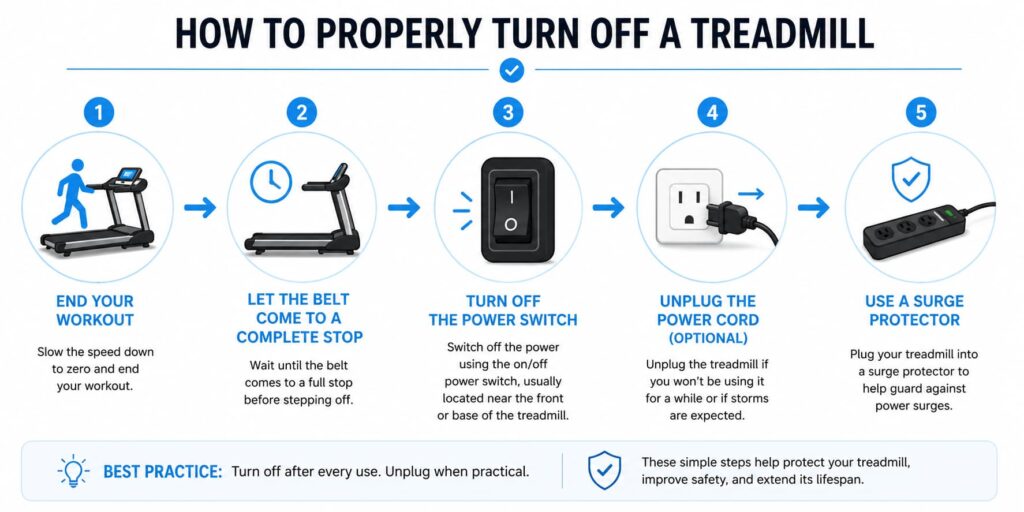
Turning off your treadmill correctly only takes a few seconds and can help protect the machine over time. Follow these simple steps:
- End your workout and reduce the speed to zero.
- Let the belt come to a complete stop before stepping off.
- Turn off the power switch, usually located near the front or base of the treadmill.
- Unplug the power cord (optional) if you won’t be using the treadmill for a while or if storms are expected.
- Use a surge protector to help protect the treadmill from electrical surges.
While you’re caring for your treadmill, it’s also worth following a regular treadmill maintenance routine to keep it running smoothly and extend its lifespan.
Common Treadmill Power Mistakes to Avoid
Even if you regularly turn off your treadmill, a few common mistakes can reduce safety or put unnecessary strain on the machine. Avoid these habits to help keep your treadmill running reliably:
- Using extension cords
- Not using surge protection
- Leaving the safety key inserted
- Unplugging during software updates
- Blocking ventilation around the motor
The Best Practice: Turn Off Your Treadmill After Every Workout
For most treadmill owners, the safest and simplest approach is to turn the machine off after every workout and unplug it whenever practical.
While leaving a treadmill plugged in is generally safe, unplugging it can help reduce standby power consumption and protect sensitive electronics from power surges.
If you use your treadmill every day, a quality surge protector can provide an extra layer of protection without the hassle of unplugging it after each session. However, if you’re going away for an extended period or severe weather is expected, unplugging your treadmill is strongly recommended.
By following these simple habits, you can help improve safety, reduce unnecessary energy use, and keep your treadmill in good condition for years to come.
Related Questions
1. Can a power surge damage a treadmill?
Yes, a power surge can damage sensitive treadmill components, including the console, motor control board, and internal electronics. Using a surge protector can help reduce the risk of costly repairs.
2. Is it okay to leave a treadmill in standby mode?
Yes, leaving a treadmill in standby mode is generally safe for daily use. However, the machine may still draw a small amount of electricity, and unplugging it provides extra protection during storms or long periods of inactivity.
3. How much electricity does a treadmill use when idle?
Most treadmills use only a small amount of electricity when idle, often just a few watts to power the console or standby features. While the cost is usually low, it can add up over time if the treadmill remains plugged in year-round.