A yoga wheel is an effective tool for building core strength. Its circular shape creates instability, forcing your core muscles to work harder to maintain balance and control.
Core strength encompasses the muscles of the abdomen, lower back, and hips that support posture, balance, and prevent injury. The yoga wheel is a simple but powerful prop that activates these muscles more deeply than many traditional floor exercises.
Read on to learn why the yoga wheel works so well for core strength and how to use it to build better stability.
How the Yoga Wheel Strengthens Your Core
The yoga wheel may look simple, but it delivers a powerful core workout. Because it moves and rolls, your body has to work harder to stay balanced, which switches on more muscles than many floor exercises.
Here are ways in which the yoga wheel enhances your core strength.
1. Dynamic Muscle Engagement
The wheel creates instability, forcing your core to stay active the entire time.
During movements like plank-to-pike or knee tucks, your abs, lower back, and obliques must make constant micro-adjustments to keep you steady.
Even basic yoga poses, such as planks or lunges with your hands or feet on the wheel, demand more control because the wheel never stays still.
2. Extended Range of Motion
Yoga wheel rollouts allow your body to move farther than standard abs exercises.
This deeper range targets the rectus abdominis (your “six-pack”), obliques, and stabilising muscles, helping you build strength through the full movement.
3. Improved Balance and Stability
Balancing on the wheel activates smaller stabiliser muscles. Over time, this improves coordination and functional strength for everyday activities.
4. Versatile Core Training
Instead of training your abs in just one position, the wheel allows you to strengthen your core through sitting, kneeling, and plank-based movements.
Exercises like supported boat pose, side planks with oblique crunches, mountain climbers, and rollouts challenge the core in both static and dynamic ways.
By training your core in multiple positions and movement patterns, the yoga wheel improves both strength and control. This variety helps your core work more effectively in real-life movements, not just during isolated abdominal exercises.
5. Deep Muscle Activation and Full-Body Coordination
Beyond surface muscles, the wheel activates deep stabilisers like the transverse abdominis. Many exercises also require your core to work in sync with your shoulders, back, and hips to prevent slipping, building strong, coordinated movement.
Effective Yoga Wheel Core Exercises
The yoga wheel turns a regular ab workout into a fun challenge. Since the wheel moves, your body has to work overtime to stay steady. This helps you find those deep muscles that regular sit-ups often miss.
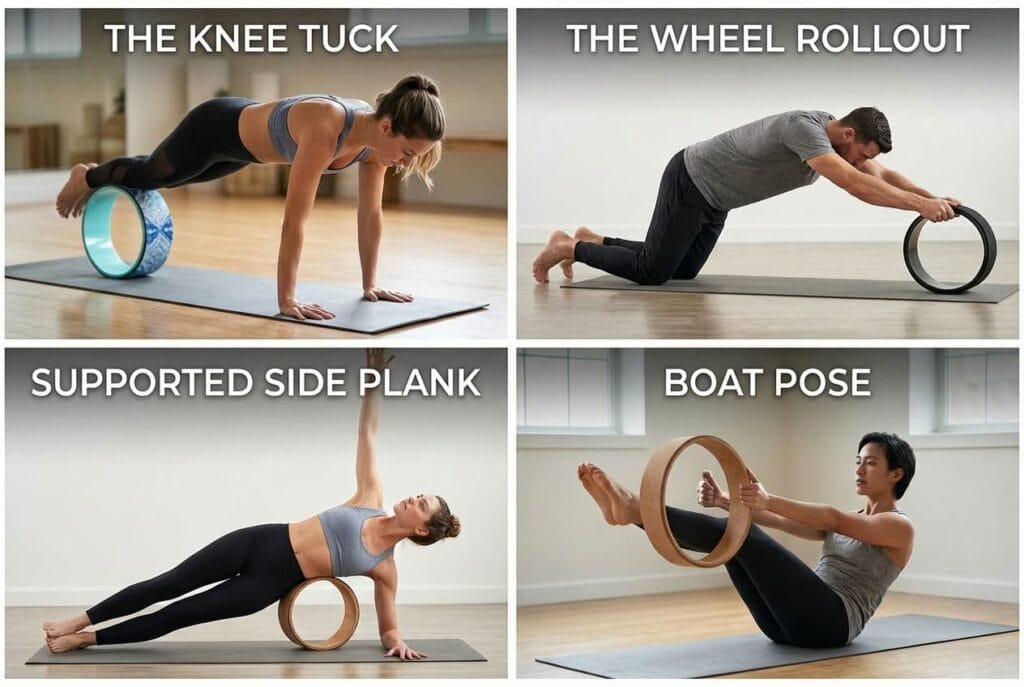
Give these four moves a try to level up your yoga core workout or abdominal strength training:
1. The Knee Tuck
Start in a push-up position, but rest your shins on top of the wheel. Use your ab muscles to pull your knees toward your chest, then slowly roll them back out.
- Why it’s great: It hits your lower abs and helps you stay steady.
2. The Wheel Rollout
Kneel on the floor with your hands on the wheel. Slowly push the wheel forward as far as you can without arching your back, then pull it back in.
- Why it’s great: It works your abs, shoulders, and back all at once.
3. Supported Side Plank
Lie on your side and rest your hip on the wheel with your legs stacked. Hold this position, or try a side crunch for an extra burn.
- Why it’s great: It supports your body while making your side muscles (obliques) work hard for balance.
4. Boat Pose (Navasana)
Sit on the floor in a “V” shape with your feet up. Hold the wheel between your hands and move it side to side, or place it behind your back for extra support.
- Why it’s great: It builds “staying power” in your abs and fits perfectly into any yoga routine.
Safety Tips When Using a Yoga Wheel for Core Training
Using a yoga wheel is great for your core, but we want you to stay safe while getting those gains! Think of the wheel as a partner. It’s there to help you, but you have to treat it with respect.
Here are some easy tips to keep your workout fun and injury-free:
- Clear the Space: Make sure there’s no furniture nearby. If you wobble off, you want a clear landing zone.
- Get a Grip: Use a non-slip yoga mat. The wheel can slide away like a runaway tire on hardwood floors, which is a recipe for a faceplant.
- Protect Your Back: Always “zip up” your abs. By keeping your core muscles tight, you create a natural brace that protects your lower back from straining.
- Start Small: Don’t try the fancy balancing acts on day 1! Start with your knees on the ground and go for harder moves only when you feel steady.
- Listen to Your Body: If something hurts, stop! Avoid overextending or arching your back too far.
Who Can Benefit Most from Yoga Wheel Core Training?
The yoga wheel isn’t just a cool-looking prop for your living room. It’s a powerhouse tool for almost anyone.
Because the wheel is round and moves, it forces your muscles to work harder just to stay steady. This “wobble factor” turns a basic workout into a total-body challenge.
Here is a look at who should give it a spin:
- Yoga Lovers: If you’ve mastered the floor, the wheel adds a new challenge. It helps you find a deeper core engagement in poses you thought you already knew.
- Gym Enthusiasts: Tired of the same old crunches? Using a wheel is a great way to level up your ab routine and target those muscles that standard machines miss.
- Posture Seekers: If you spend all day hunched over a desk, this is for you. It helps build functional strength and balance, helping you stand taller and move better.
- Total Beginners: Even if you’re new, you can benefit! As long as you have proper guidance and take it slow, it’s a fun way to start your fitness journey. Also, be sure you use the right yoga wheel size.
Roll Your Way to a Rock-Solid Core
So, can the yoga wheel actually help your core? You bet! By adding a bit of a wobble, this simple yoga prop forces you to build incredible strength, stability, and control.
It is way more challenging than standard crunches because it hits those deep muscles you didn’t even know you had. Just remember to take it slow and be consistent. If you stick with it, you’ll see amazing results.
Ready to find the perfect gear? Check out our review of the Lotus Wheel 3-Pack to get started today.
Related Questions
1. Can beginners use a yoga wheel for core exercises?
Beginners can safely use a yoga wheel for their core as long as they start with supported, low-intensity movements. If you like, start with beginner-friendly yoga wheel positions before moving to more challenging poses.
2. How often should I use a yoga wheel to strengthen my core?
Using a yoga wheel 2 to 3 times per week is enough to see improvements in core strength and stability. Consistency matters more than intensity, so short, controlled sessions work best, especially when focusing on proper form.
3. What core exercises can I do at home?
Some no-equipment core exercises you can do at home include Superman, dead bugs, and glute bridges. These beginner movements target the abdominals, obliques, and lower back, often requiring only floor space. Get started with our list of the best core exercises.

- Can the Yoga Wheel Help with Core Strength? - 27 January 2026
- What Are the Best Exercises on a Trampoline for Weight Loss? - 17 December 2025
- How Does Sleep Quality Impact Muscle Recovery and Fitness Progress? - 16 December 2025