You need an exercise bike with a weight limit at least 15–20% (or around 20–30 kg) above your body weight. This buffer improves safety, reduces frame wear, and keeps the bike stable, especially when standing on the pedals during intense workouts.
Most exercise bikes support between 100kg and 150kg, but the right weight limit depends on your body weight, workout style, and how often you plan to use the bike. Weight limits matter for your safety and durability.
This guide helps you choose the right exercise bike with confidence.
Quick Answer
Most people should choose an exercise bike with a weight capacity 20–30kg above their body weight. This extra capacity gives you more stability and durability, particularly if you ride often or stand on the pedals during harder workouts.
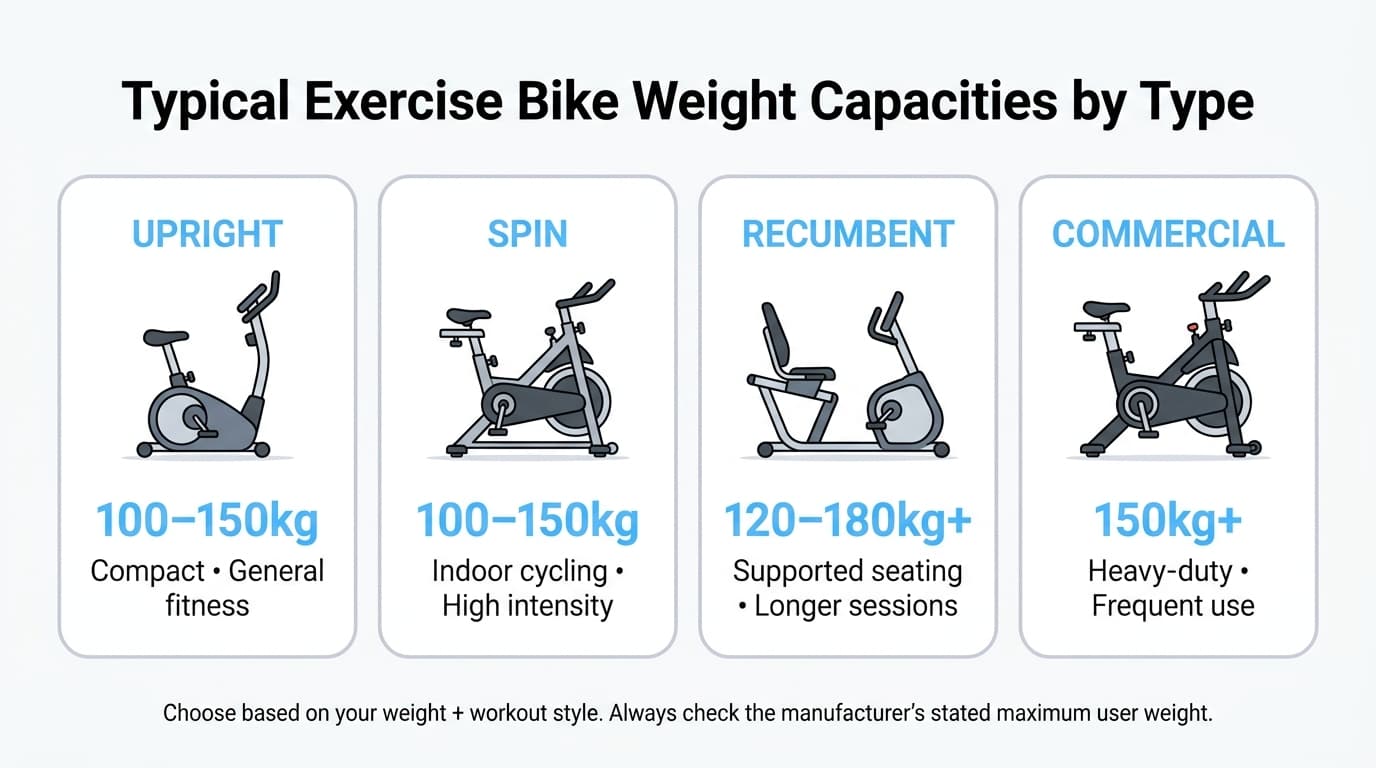
Most home exercise bikes support around 100–150kg, while some heavy-duty and commercial models can support considerably more. The best choice depends on your body weight, workout intensity, how often you use the bike, and whether you choose an upright, recumbent, spin or commercial model.
- Quick Answer
- What is an Exercise Bike Weight Limit?
- What Exercise Bike Weight Capacity Do You Need?
- What Happens If You Exceed an Exercise Bike’s Weight Limit?
- Weight Limit vs Build Quality: Which Matters More?
- Which Exercise Bike Type Is Best for Heavier Users?
- Common Mistakes When Choosing an Exercise Bike Weight Limit
- Final Verdict: What Exercise Bike Weight Limit Should You Choose?
- Related Questions
What is an Exercise Bike Weight Limit?
The weight limit of an exercise bike is the maximum body weight the bike is designed to safely support during use.
It helps keep you safe, protects the bike from damage, and ensures a smooth riding experience. A higher weight limit usually means a stronger frame and better overall build quality.
Manufacturers set weight limits by testing how much load the bike can handle under different conditions, including steady pedalling, standing, and long-term use.
It is not just about how strong the frame is. This is why two bikes with the same weight rating can still feel very different in stability and durability.
Several parts work together to support your weight:
- Frame construction: The main structure that holds everything together.
- Stabiliser bars: Keep the bike balanced and prevent tipping,
- Pedals and cranks: Handle the force from your legs.
- Seat post: Supports your body weight while seated.
- Bearings and moving parts: Help the bike move smoothly under pressure.
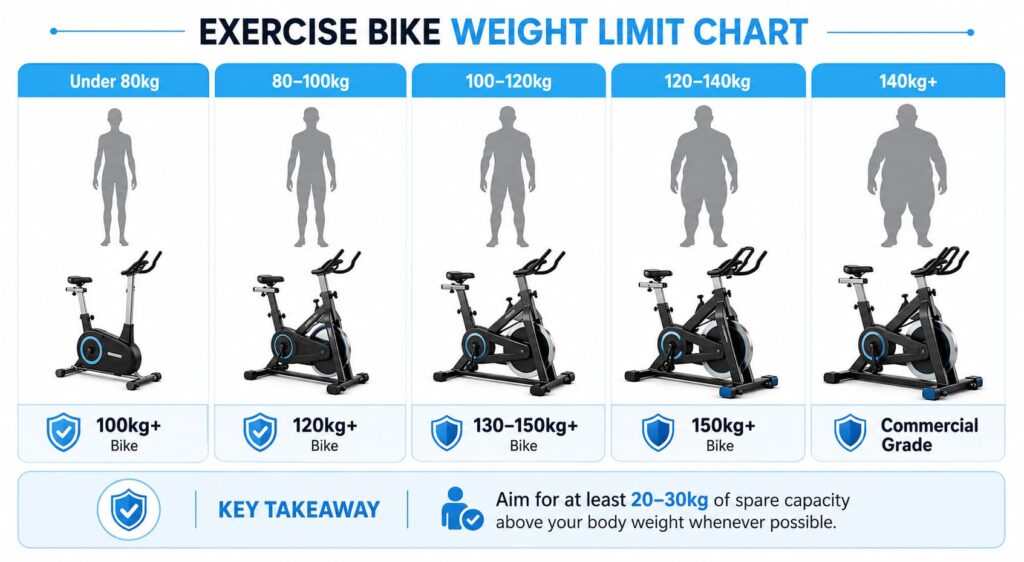
Exercise Bike Weight Limit Chart
Here’s a simple guide to help you quickly find the right exercise bike for your body weight.
It matches common weight ranges with the recommended minimum bike capacity, so you can choose a stable option without guessing.
What Exercise Bike Weight Capacity Do You Need?
Aside from your body weight, your ideal exercise bike capacity also depends on how you plan to use it. Different workout styles put different levels of stress on the bike.
For casual cardio and general fitness:
- Lower workout intensity
- Standard home exercise bikes are usually enough.
- Recommended bike capacity: 100–120kg
For weight loss workouts:
- More frequent use
- A slightly higher capacity adds stability and comfort.
- Recommended bike capacity: 120–130kg+
For high-intensity cycling:
- Standing pedalling puts more stress on the frame.
- Stronger resistance setups increase the overall force on the bike.
- Higher weight limits give a safer buffer.
- Recommended bike capacity: 130–150kg+
For multiple users:
- Always choose based on the heaviest rider.
- Look for stronger build quality for long-term durability.
- Recommended bike capacity: 150kg+ (or commercial-grade if heavily used)
In general, the harder and more often you train, the more important it is to choose a higher weight capacity. This helps keep your rides safer, smoother, and more stable over time.
What Happens If You Exceed an Exercise Bike’s Weight Limit?
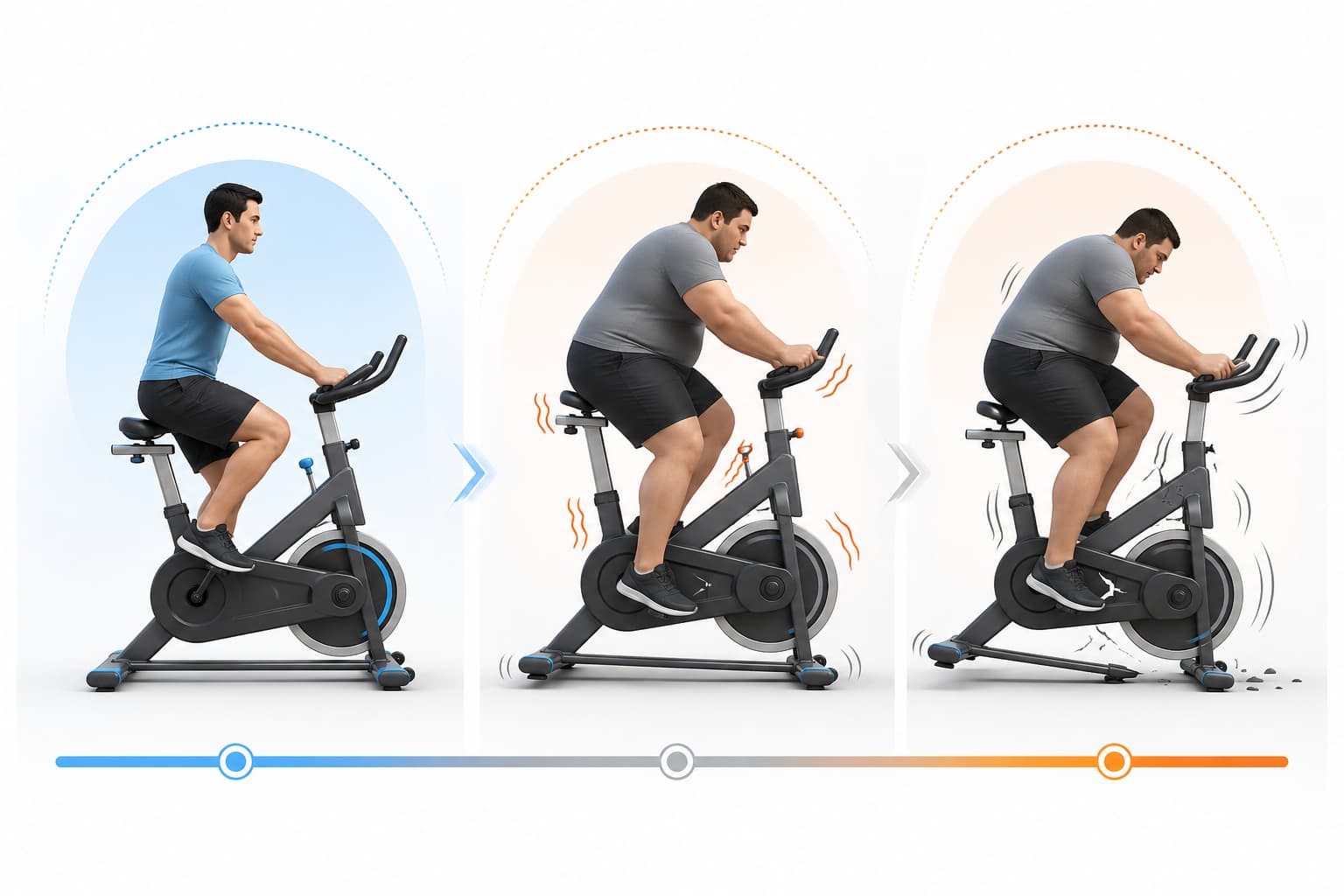
Exceeding the weight limit puts extra stress on the bike and can affect both safety and performance.
- Reduced stability: The bike may feel wobbly, making workouts less steady and reducing confidence, especially when standing on the pedals.
- Faster wear and tear: Key parts like pedals, bearings, cranks, and seat posts can wear out much faster than normal due to added pressure.
- Possible warranty issues: Going over the stated limit may void the manufacturer’s warranty or go against usage guidelines.
- Increased injury risk: Extra strain can cause component failure or sudden instability, increasing the chance of losing balance during use.
Signs an Exercise Bike May Not Support Your Weight Properly
If an exercise bike is not strong enough for your body weight, it will often show warning signs. Paying attention to these can help you avoid damage or injury:
- Excessive movement: The bike shakes or rocks more than normal during use.
- Frame flex: The structure bends slightly when you pedal hard or stand up.
- Seat post slipping: The seat slowly drops or shifts while riding.
- Unusual noises: Creaking, clicking, or squeaking sounds under load.
- Pedal instability: Pedals feel loose, uneven, or less secure.
If you notice more than one of these signs, the bike may not have enough weight capacity for your needs.
Weight Limit vs Build Quality: Which Matters More?
Weight capacity is important, but build quality often has a bigger impact on how stable, comfortable, and durable an exercise bike feels. A bike may have a high weight limit, but poor construction can still lead to wobbling or faster wear over time.
So, when looking for an exercise bike, consider these factors as well.
1. Frame Construction
A strong frame is the foundation of a durable exercise bike. Look for:
- High-quality steel construction
- Strong welds at key joints
- A heavier overall bike weight for added stability
2. Flywheel Weight
Flywheel weight affects how smooth and stable the bike feels while pedalling. Heavier flywheels often provide a more consistent riding experience, especially during longer workouts. You can learn more in our guide to evaluating exercise bike flywheel weight.
3. Resistance System
The resistance system also plays a role in performance and maintenance. Magnetic resistance is typically quieter and requires less upkeep, while friction resistance can offer a more road-like feel but may need more maintenance over time.
4. Overall Design and Stability
Other features can improve stability and comfort, including:
- A wider base for better balance
- Strong stabiliser bars
- Secure and easy-to-adjust seat settings
Which Exercise Bike Type Is Best for Heavier Users?
If you need a higher weight capacity, there are several exercise bike styles worth considering.
1. Upright Exercise Bikes
Upright exercise bikes offer a traditional cycling position that feels similar to riding a regular bicycle. They also have a compact footprint, making them a good choice for smaller home gyms. However, some users may find them less comfortable during longer workout sessions.
2. Recumbent Exercise Bikes
Recumbent exercise bikes provide greater back support and are often easier on the joints. Many people find them more comfortable for longer rides, especially if they have mobility concerns or lower back discomfort. The main downside is that they require more floor space than upright bikes.
Not sure which style is right for you? See our comparison of recumbent vs upright exercise bikes.
3. Commercial Exercise Bikes
Commercial exercise bikes are built for frequent use and typically offer higher weight capacities, stronger construction, and greater long-term durability than standard home models.
The best choice depends on your weight, comfort preferences, and workout goals. If you’re ready to compare specific models, check out our guide to the best exercise bikes in Australia.
Common Mistakes When Choosing an Exercise Bike Weight Limit
Choosing the right weight limit is important, but many buyers make mistakes that can affect safety and durability. Keep these in mind before buying:
- Buying a bike rated exactly at your weight: This leaves little room for movement and extra stress during workouts. Aim for at least 20–30kg of spare capacity.
- Ignoring workout intensity: High-intensity workouts and standing pedalling place more force on the bike than casual riding.
- Focusing only on price: A cheaper bike may not offer the stability or durability you need.
- Assuming all bikes with the same weight rating are equally strong: Build quality, frame design, and components can vary significantly.
- Overlooking multiple-user households: If several people will use the bike, choose a capacity based on the heaviest rider.
Final Verdict: What Exercise Bike Weight Limit Should You Choose?
As a general rule, you should choose an exercise bike with at least 20–30kg of spare capacity above your body weight. This extra margin can improve stability, comfort, and long-term durability.
While the weight limit is an important factor, it should not be the only thing you consider. Build quality, frame strength, and overall design also play a major role in how the bike performs over time.
Before buying, think about your workout style, how often you plan to ride, and whether you prefer an upright or recumbent bike. Choosing the right combination of capacity and build quality will help you enjoy safer and more comfortable workouts.
Related Questions
1. Do exercise bikes have weight limits?
Yes, every exercise bike has a maximum user weight set by the manufacturer, although the limit varies between models and bike types. Most home exercise bikes support around 100–150kg, while some heavy-duty and commercial models have higher weight limits.
2. What happens if you exceed an exercise bike’s weight limit?
Exceeding the weight limit can make the bike less stable and put extra stress on the frame, pedals, cranks, bearings, and seat post. It can also increase wear, create warranty issues, and raise the risk of component failure or losing your balance.
3. What is the average spin bike weight limit?
Many spin bikes have a maximum user weight of around 150kg, although cheaper and lighter models may have lower limits.
4. What is the best exercise bike type for heavier users?
For heavier users, a heavy-duty upright, recumbent, or commercial exercise bike with plenty of spare weight capacity is usually a better choice than a basic lightweight model. Look beyond the stated weight limit and consider frame strength, stability, base width, and overall build quality, too.
5. Are recumbent bikes better for higher weight limits?
Recumbent bikes can be a good option for heavier users because they provide a supported seating position, and some models have higher weight capacities than standard home bikes.