Vibration plate frequency refers to the number of times the machine oscillates up and down per second, measured in Hertz (Hz). There is no single ideal frequency, however. The right setting depends on your goal.
Many vibration plates offer settings from 5 Hz to 50 Hz, but most users don’t know what these numbers really mean. Is higher always better?
This guide explains how frequency works, how it affects your body, and how to choose the best setting for recovery, weight loss, or strength.
What is Vibration Plate Frequency?
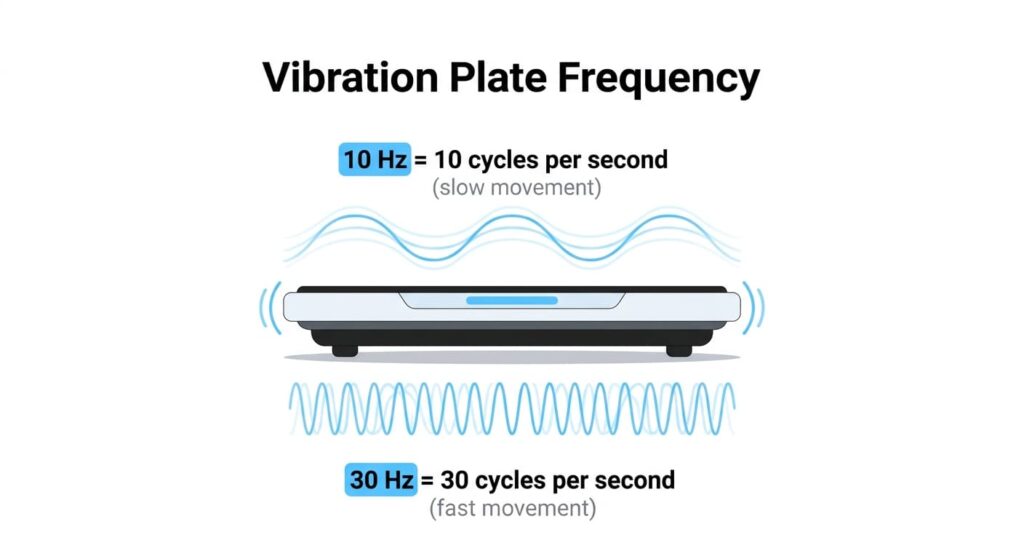
Vibration plate frequency is how many times the platform moves up and down or side to side each second. It is measured in Hertz (Hz).
For example, 10 Hz means the plate moves 10 times per second, while 30 Hz means it moves 30 times per second. As the platform vibrates, your muscles contract and relax automatically to help you stay balanced.
Frequency matters because it affects how your body responds. It can change muscle activation, balance challenge, circulation, nervous system response, bone loading, and how intense the workout feels. Most vibration plates range from about 5 Hz to 50 Hz.
Is Vibration Plate Frequency the Same as Intensity?
A common mistake is thinking frequency and intensity are the same, but they are not. Frequency helps create intensity, but it does not define it on its own. Intensity is the overall challenge you feel during a session.
Here’s the difference:
- Frequency: number of vibrations per second
- Amplitude: how far the plate moves each vibration
- Intensity: total workout challenge from both factors combined
Two machines can have the same 30 Hz setting, but feel very different. One may have low amplitude and feel gentle, while another has higher amplitude and feels much more intense overall.
How Does Vibration Plate Frequency Affect Your Body?
Vibration plate frequency affects your body in different ways depending on how high or low the setting is. The changes happen because your muscles respond automatically to the vibrations to help you stay balanced and stable.
- Low frequencies create gentle stimulation that helps improve blood flow, circulation, recovery, and relaxation. These settings are often used for light movement, warm-ups, or cool-down sessions. They feel soft and easy on the body, making them suitable for beginners or recovery days.
- Medium frequencies increase muscle activation. This means more muscle fibres are recruited, energy use goes up, and the workout feels more challenging. Many people use this range for general fitness, toning, and fat loss support.
- High frequencies place a greater demand on your nervous system. They can support fast-twitch muscle recruitment, athletic performance, strength development, and bone-loading effects that help maintain bone health.
Possible effects of vibration plate frequency include:
- Improved blood flow
- Better circulation
- Faster recovery
- Increased muscle activation
- Higher calorie burn
- Improved balance and stability
- Greater strength and power development
The best frequency depends entirely on what you’re trying to achieve and your fitness level.
What Vibration Plate Frequency Should You Use?
There is no single “best” vibration plate frequency. The right setting depends on your goal, fitness level, and how your body responds. Understanding the range of potential vibration plate benefits can help you choose the most appropriate setting for your needs.
Here’s a quick guide.
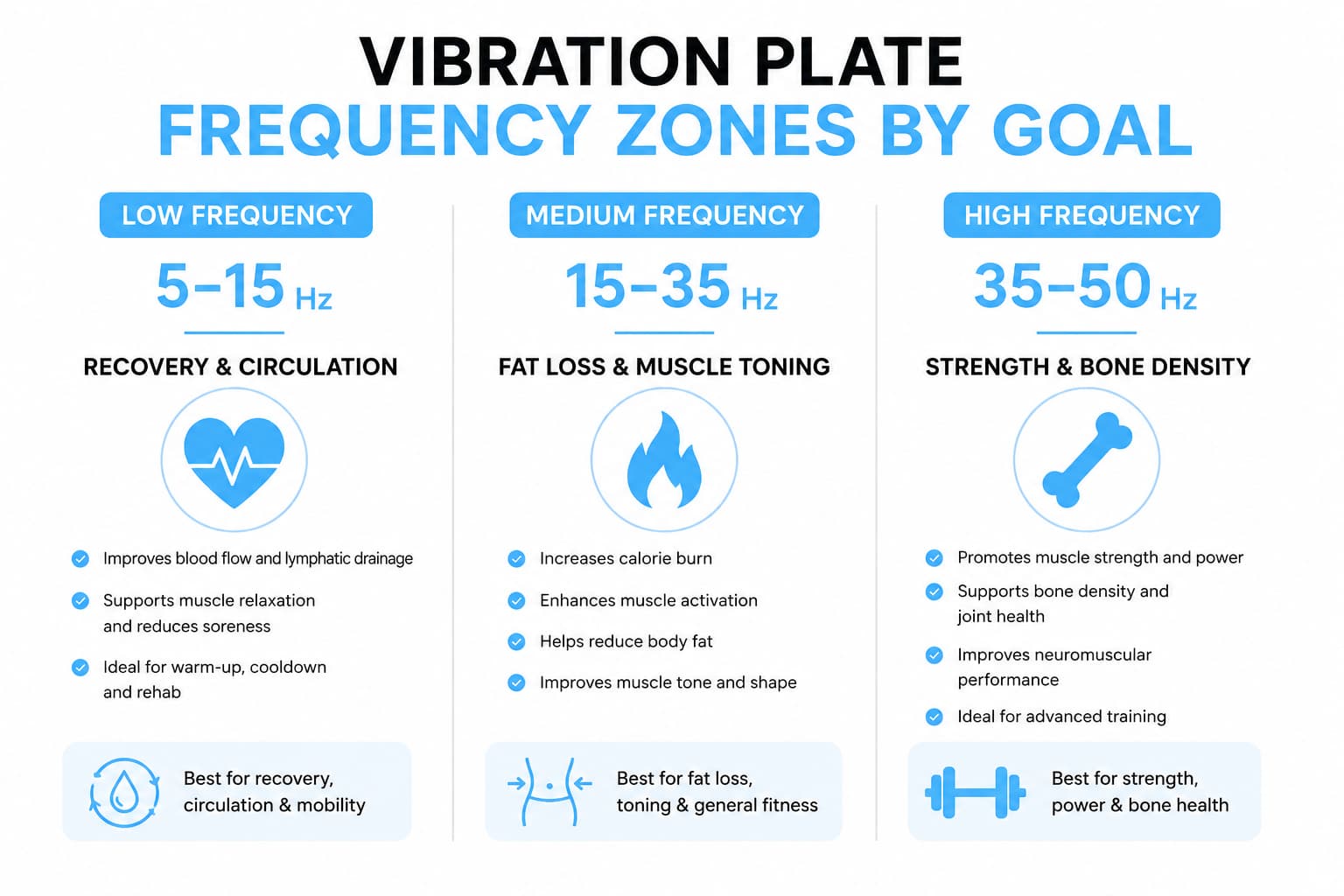
1. Low Frequencies (5–15 Hz)
Best For
- Lymphatic drainage
- Improved circulation
- Mobility work
- Balance training
- Recovery sessions
- Cool-downs
How It Works
These lower frequencies create gentle rhythmic pulsing with minimal continuous tension. This helps your body move in a soft, controlled way rather than a strong workout load.
Benefits include:
- Increased blood flow
- Enhanced lymphatic movement
- Reduced stiffness
- Relaxation of tight muscles
2. Medium Frequencies (15–35 Hz)
Best For
- Weight loss
- Muscle toning
- General fitness
- Beginner-to-intermediate strength development
How It Works
This range increases muscle activation and overall training intensity. More muscle fibres are recruited, heart rate may rise slightly, and calorie burn increases when combined with movement.
The 25–35 Hz range is commonly used for body composition and toning programs, especially when paired with exercises such as squats, lunges, and push-ups.
Combining medium frequencies with vibration plate exercises such as squats and lunges may help increase muscle activation.
3. High Frequencies (35–50 Hz)
Best For
- Advanced strength training
- Athletic power development
- Bone density support
How It Works
Higher frequencies create rapid muscle contractions that challenge fast-twitch muscle fibres. This supports explosive strength, power production, and improved neuromuscular performance.
Potential bone health benefits may include stimulation of osteoblast activity, which plays a role in bone formation. This may support:
- Bone maintenance
- Age-related bone loss prevention
- Higher mechanical stimulation
Note: People with osteoporosis or medical conditions should seek professional advice before using higher frequency settings.
Beginner’s Guide for Finding Your Ideal Frequency
If you’re new to a vibration plate, it’s important to start slowly.
Jumping straight into high frequencies can feel overwhelming and may lead to dizziness, muscle fatigue, poor balance, or general discomfort.
Here’s a gradual approach to help your body adapt safely and build confidence over time.
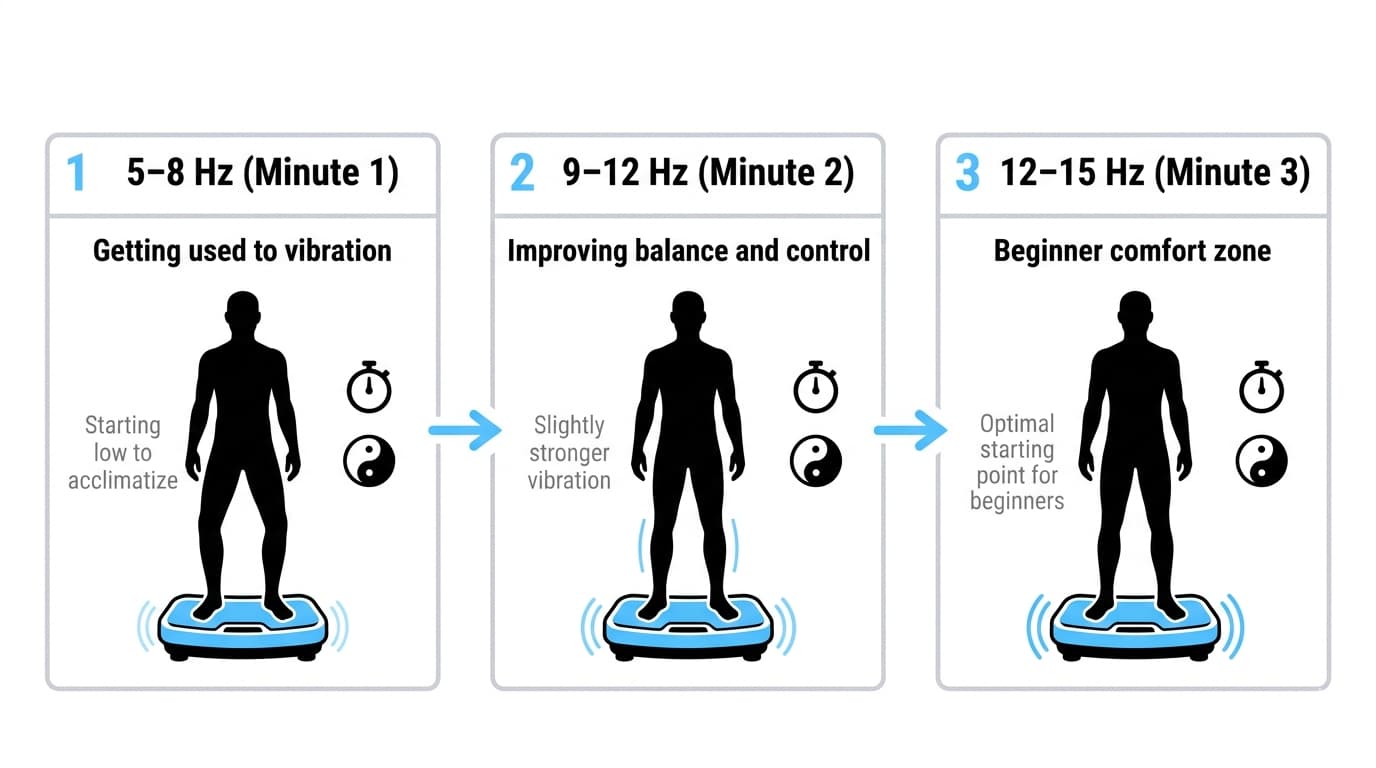
- Step 1 (Minute 1): Start at 5–8 Hz. Stand upright with your feet hip-width apart and knees slightly bent. This helps your body get used to the gentle vibration and improve balance.
- Step 2 (Minute 2): Increase to 9–12 Hz. As you feel more stable, slowly increase the frequency. Focus on keeping a steady posture, breathing comfortably, and relaxing your upper body.
- Step 3 (Minute 3): Finish at 12–15 Hz. End your short beginner session at a slightly higher but still gentle setting. Most users will notice increased muscle engagement, better circulation, and improved confidence using the machine.
Over time, you can gradually explore higher frequencies based on your goals.
Common Mistakes When Choosing a Vibration Plate Frequency
Many people make simple mistakes when setting their vibration plate frequency, which can reduce results or make the workout uncomfortable.
Common mistakes include:
- Starting too high: Jumping into high frequencies can cause discomfort and reduce control.
- Ignoring your goal: Different goals, like recovery, fat loss, or strength, need different settings.
- Standing with locked knees. This reduces stability and makes vibration harder on the joints
- Focusing only on frequency. Amplitude, posture, exercise choice, and session length all affect results, too.
Remember, vibration plate training works best when all these factors are balanced together. Frequency is important, but it’s only one part of the full picture.
Find Your Ideal Frequency
Vibration plate frequency measures platform vibrations per second, typically ranging from 5 Hz to 50 Hz.
To get the best results, match the speed to your fitness targets rather than just picking the maximum setting. Low frequencies (5–15 Hz) handle recovery and circulation, medium settings (15–35 Hz) drive weight loss and toning, and high frequencies (35–50 Hz) build bone density and strength.
When choosing a machine, look for a stable platform, wide frequency ranges, and adjustable amplitude. To compare top-rated local models, our guide to the best vibration plates in Australia highlights the most versatile options for any fitness level.
Related Questions
1. Does a higher frequency mean better results?
No, a higher frequency does not always mean better results. The best setting depends on your goal, because different frequencies support recovery, fat loss, strength, or balance in different ways.
2. What frequency should beginners start with?
Beginners should start with low frequencies, usually around 5–10 Hz. This helps your body adapt safely and reduces the risk of dizziness or discomfort.
3. How often should you use a vibration plate?
Most people start with 2–4 sessions per week, depending on their fitness level and goals. Short sessions are enough, especially when using higher frequencies or combining exercises.
- What Are the Best Alternatives to an Elliptical Machine? - 24 September 2026
- Why Does My Skin Itch After Using a Massage Gun? - 23 September 2026
- Adjustable vs Fixed Stride Ellipticals: Which Is Better? - 22 September 2026