Your skin usually itches after using a massage gun because the fast vibrations boost blood flow, wake up nerve endings, and may cause your body to release a chemical called histamine.
For most people, this kind of itch is short-lived and harmless. It often fades within a few minutes.
However, if the itching comes with pain, swelling, a rash, bruising, or discomfort that lingers, it could signal irritation, overuse, or an underlying skin or health issue.
Below, we’ll explain why it happens, if it’s normal, how to stop it, and when to seek medical advice.
A mild itch after using a massage gun is usually nothing to worry about, especially if it goes away within a few minutes. It often happens because the massage gun boosts blood flow and wakes up the nerves in your skin.
This can be more common if:
- You’re new to massage guns
- The area has not been massaged before
- You recently exercised
- Blood flow increases quickly
However, itching that does not go away is different. Persistent itching, a rash, or pain is not considered normal. If this happens, stop using the massage gun and keep an eye on your skin.
- Why Does a Massage Gun Make Your Skin Itch?
- When Should You Stop Using a Massage Gun?
- How Can You Prevent Itching After Using a Massage Gun?
- Who Is More Likely to Experience Itchy Skin?
- Does Itchy Skin Mean You’re Allergic to the Massage Gun?
- Use Your Massage Gun Safely and Listen to Your Skin
- Related Questions
Why Does a Massage Gun Make Your Skin Itch?
A massage gun can make your skin itch for several reasons. Most of the time, it comes down to how your skin, blood vessels, and nerves react to the fast-tapping motion.
This is usually mild and short-lived, but it can feel strange if you’re not used to it.
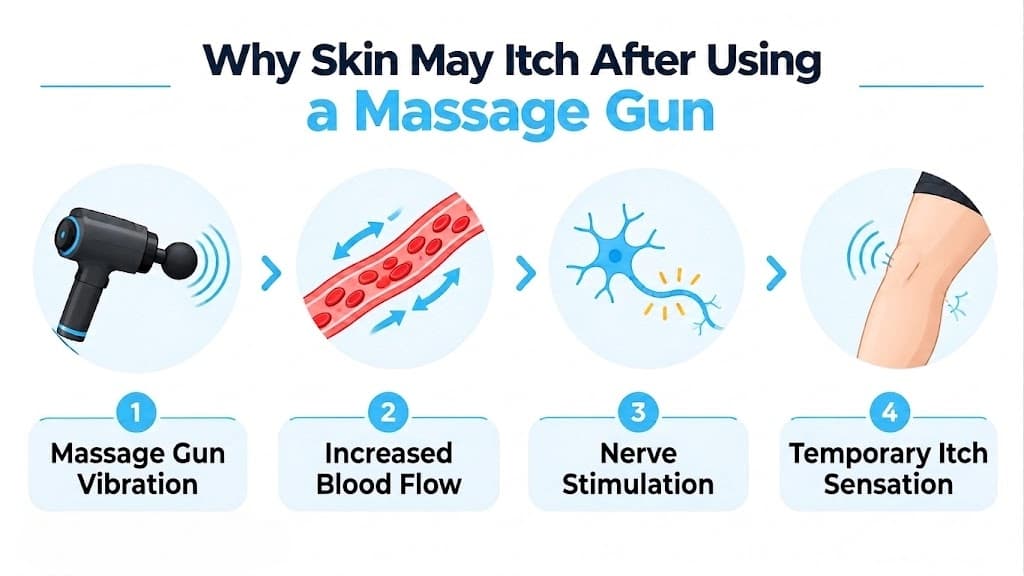
1. Increased Blood Circulation
Massage guns use percussion therapy, which can send quick pulses into your muscles and skin. These pulses can increase blood flow to the treated area.
When this happens:
- Tiny blood vessels under the skin widen.
- More blood moves through the area.
- Your skin may start to feel warm.
- Nerve endings can become more active.
- Your brain may read this feeling as itching.
Think of it like this:
Increased percussion → More blood flow → Nerve stimulation → Temporary itch
For many people, this itching fades soon after they stop using the massage gun.
2. Nerve Stimulation
A massage gun does more than just work on your muscles. It can also activate the nerves in your skin. This is why your skin might feel itchy while or after using it.
Massage guns can stimulate:
- Superficial nerves near the skin
- Pressure receptors that sense touch and movement
- Sensory pathways that send signals to your brain
When these nerves are triggered quickly, your brain may read the feeling in different ways. Some people notice tingling, pins and needles, or mild itchiness.
This can be more noticeable in sensitive areas, thin skin, or spots not used to massage.
3. Histamine Release
Another reason your skin may itch after using a massage gun is histamine. Histamine is a natural chemical your body releases during certain skin reactions. Sometimes, massage or strong rubbing can trigger small amounts of it.
Histamine can:
- Increase blood flow to the area
- Make nerve endings more sensitive
- Cause an itchy or prickly feeling
This is similar to the itch you might feel after scratching your skin or rubbing one spot for too long. The good news is that this reaction is usually temporary.
It does not always mean you are allergic to the massage gun. If there is no rash, swelling, or hives, it is often just a short-lived skin response.
4. Dry or Sensitive Skin
Massage guns can create friction as the attachment moves over your skin. If your skin is already dry or sensitive, this extra rubbing may make it feel worse.
Dry skin may become:
- Itchy
- Irritated
- Red
- Uncomfortable
This can happen more easily if you use the massage gun on bare skin or stay in one spot for too long. To reduce friction, try applying a light moisturiser before or after use.
You may also use massage oil if it is safe for your massage gun attachment. Be sure to avoid using the massage gun on irritated, broken, or inflamed skin, as this can worsen symptoms.
For more safety tips, our guide on where not to use a massage gun has more details.
5. Too Much Pressure
Using too much pressure is another common reason your skin may itch after a massage gun session. A massage gun should glide over the muscle, not be forced deep into the skin.
Common mistakes include:
- Using the highest speed setting right away
- Pressing too hard
- Staying too long in one spot
Too much percussion can irritate the skin and the superficial nerves just under it. This may lead to itching, tingling, redness, or soreness. Start with a lower speed and light pressure, then increase only if it feels comfortable.
If you’re unsure about proper technique, check out our previous article on how to use a massage gun.
When Should You Stop Using a Massage Gun?
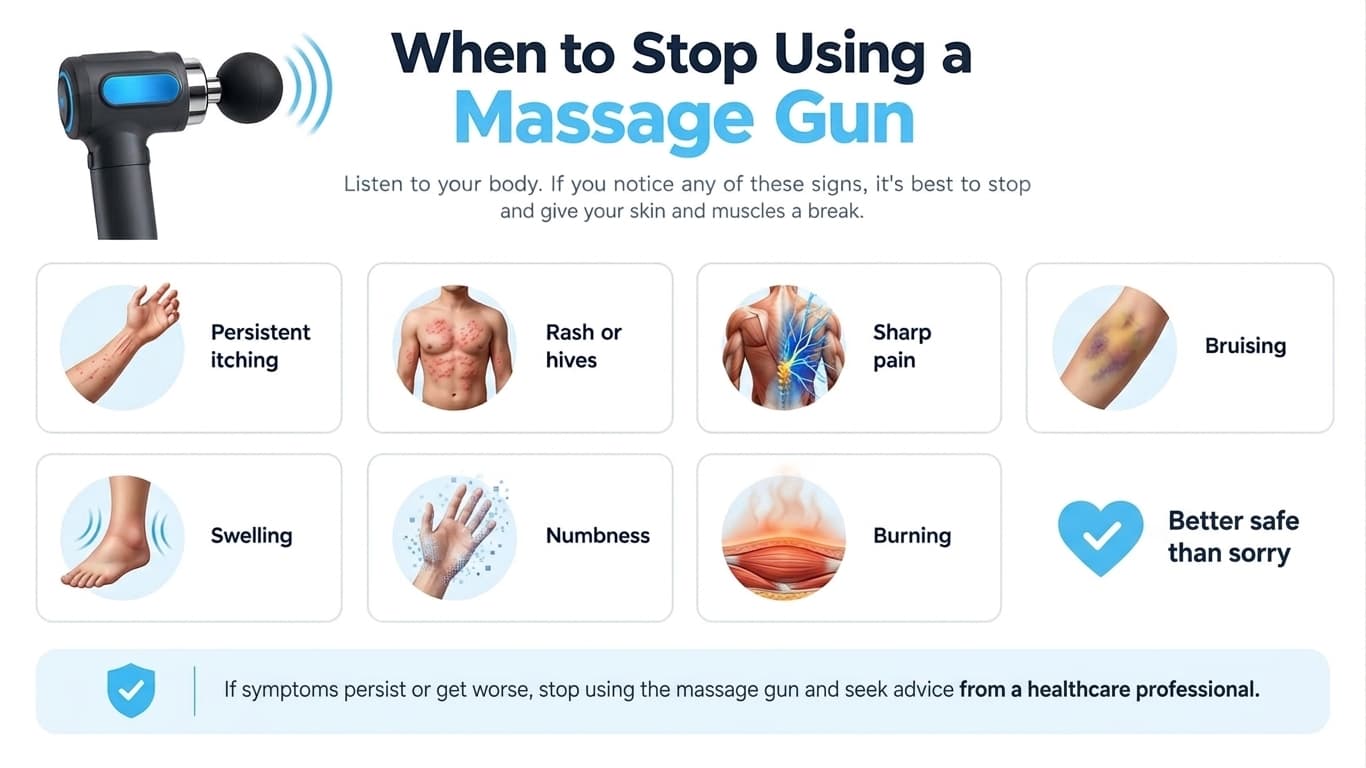
A mild itch that fades quickly is usually not a big concern. However, some symptoms mean you should stop using the massage gun and check what is going on.
Here’s a quick guide to help you decide when it is safe to continue and when it is better to stop.
| Symptom | What You Should Do |
| Mild temporary itch | Continue if comfortable |
| Persistent itching | Stop and monitor |
| Rash or hives | Stop immediately |
| Sharp pain | Stop immediately |
| Bruising | Reduce pressure or discontinue |
| Swelling | Stop using and seek medical advice |
| Numbness | Stop immediately |
Reminder: Stop using the massage gun if your symptoms get worse, or if you notice numbness, burning, intense pain, skin discolouration, swelling, or signs of an allergic reaction. When in doubt, it is safer to stop and seek medical advice.
How Can You Prevent Itching After Using a Massage Gun?
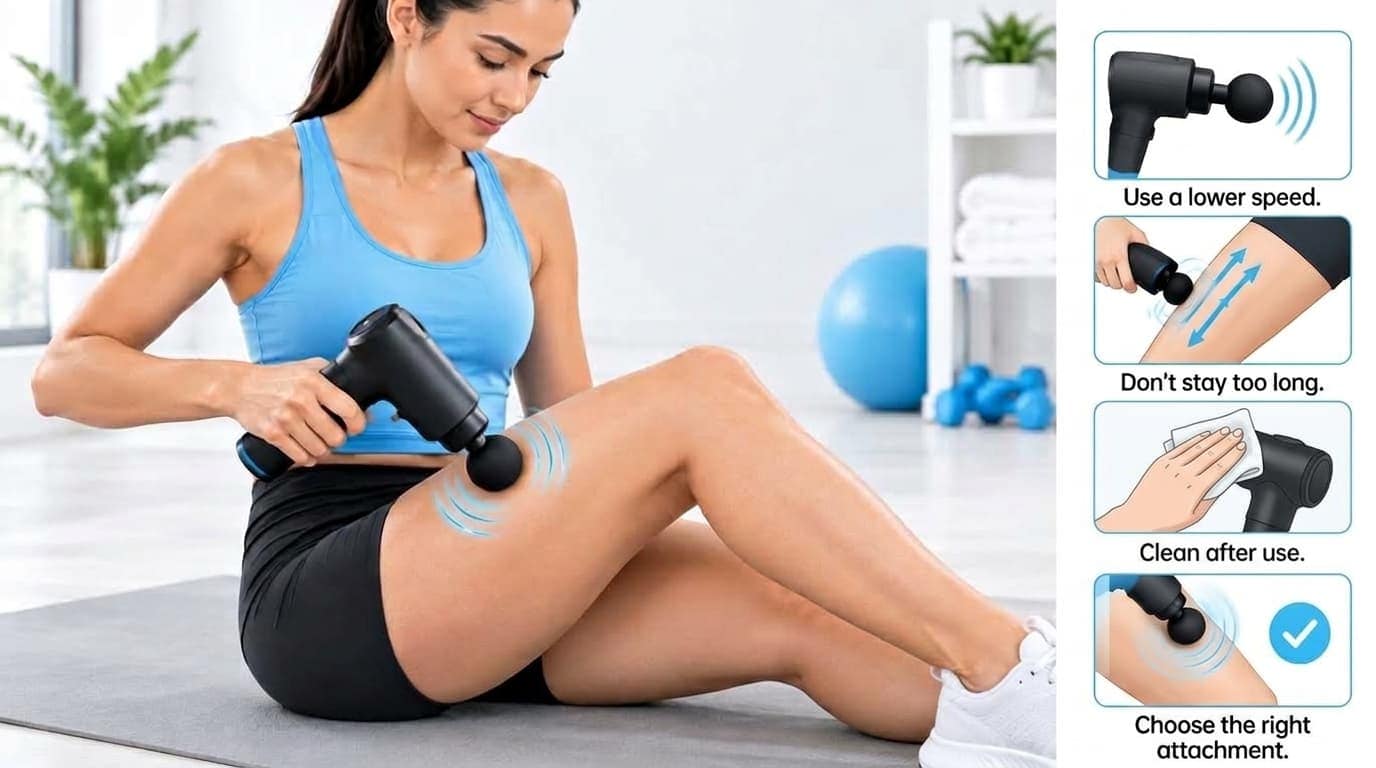
You can often prevent itching by using the massage gun gently, keeping your skin hydrated, and paying attention to how your body reacts. Use this simple checklist before your next session.
1. Use a lower speed.
Start on the lowest setting, especially if you are new to massage guns. Increase the speed if it still feels comfortable. A lower speed is often enough to relax the muscle without irritating your skin.
2. Don’t stay too long.
Use the massage gun for about 30–60 seconds per muscle group. Avoid holding it on one spot for several minutes, as this can overstimulate the skin and nerves.
3. Keep your skin hydrated.
Dry skin can itch more easily. To help reduce irritation:
- Apply moisturiser before or after use.
- Drink enough water during the day.
- Avoid treating irritated, broken, or inflamed skin.
4. Choose the right attachment.
Different attachments apply pressure in different ways. A ball head may feel softer, while a flat head gives broader pressure. A dampener attachment may be better for sensitive areas.
If you are unsure which one to use, our guide on how different massage gun attachments work explains each option in more detail.
5. Keep your massage gun clean.
Dirty attachments can transfer sweat, bacteria, and skin oils. Wipe attachments after each use and let them dry fully.
For step-by-step cleaning tips, see our guide on how to maintain a massage gun.
Who Is More Likely to Experience Itchy Skin?
Some people are more likely to feel itchy after using a massage gun. This does not always mean something is wrong. It may simply mean your skin or nerves are more sensitive to pressure, vibration, or friction.
Itching may be more common in people with:
- Eczema
- Sensitive skin
- Psoriasis
- Allergies
- Very dry skin
- Little or no experience using massage guns
First-time massage gun users may also notice itching because their bodies are not used to the fast-tapping motion. Areas with thinner skin or less muscle may also feel more sensitive.
If you are more prone to itchy skin, start slowly. Use:
- Shorter sessions
- Lower speed settings
- Lighter pressure
Also, avoid using the massage gun over active rashes, flare-ups, broken skin, or irritated areas. If the itching keeps coming back, gets worse, or comes with a rash, swelling, or pain, speak with a healthcare professional.
Does Itchy Skin Mean You’re Allergic to the Massage Gun?
Usually, no. Itchy skin after using a massage gun does not always mean you are allergic to it.
In most cases, the itch comes from increased blood flow, nerve stimulation, or friction. This type of itch is usually mild and fades within a few minutes.
A true allergy is uncommon, but it can happen. Possible triggers include:
- Rubber parts on the attachment
- Cleaning chemicals left on the device
- Massage oils or lotions
- Topical products used before massage
A temporary circulation itch usually goes away quickly and does not cause a rash. An allergic skin reaction may include hives, swelling, redness, or itching that gets worse.
Use Your Massage Gun Safely and Listen to Your Skin
Mild itching after using a massage gun is usually harmless. Often, it is caused by increased blood flow and nerve stimulation that typically fades within minutes.
You can help prevent it by using the massage gun correctly, choosing a comfortable speed, avoiding too much pressure, and cleaning the attachments after each use.
Also, if the itching is severe, persistent, or accompanied by a rash, swelling, bruising, or numbness, stop using the massage gun and seek medical advice.
If you are looking for a reliable device, check out our list of the best massage guns in Australia.
Before choosing one, compare the features and specs, such as speed settings, attachments, noise level, battery life, and intensity, so you can find a massage gun that suits your needs and comfort level.
Related Questions
1. Can a massage gun cause a rash?
Not normally, but a rash can happen if the massage gun irritates your skin, you use too much pressure, or you react to an attachment, lotion, or cleaning product. If the rash is painful, spreading, or does not improve, stop using the massage gun and seek medical advice.
2. Can I use a massage gun if I have eczema?
Use a massage gun cautiously if you have eczema, and avoid using it over active flare-ups, cracked skin, or inflamed areas. If you are unsure, speak with a healthcare professional before using one.
3. Should I scratch itchy skin after using a massage gun?
Try not to scratch itchy skin hard, as this can worsen irritation. Instead, let the area calm down, apply moisturiser, or use a cool compress if needed.
4. Can different massage guns affect skin itching differently?
Yes, different massage guns may feel different on your skin because they can vary in speed settings, attachment types, amplitude, and intensity. If your skin itches easily, comparing options like Hydragun and Theragun may help you choose a massage gun with settings that feel more comfortable for sensitive skin.

- Front-Drive vs Rear-Drive Ellipticals: Which Is Better for Your Home? - 23 October 2026
- What Treadmill Weight Limit Do You Need? Why Capacity Matters - 22 October 2026
- Can You Leave an Exercise Bike Outside? - 21 October 2026