A good flywheel weight for a home elliptical is between 7 kg and 10 kg (15-22 lbs). This usually gives you enough momentum for a smooth, natural stride without putting extra strain on your joints.
However, there’s no single “best” weight for everyone. What really matters is the smoothness of the resistance system and overall build quality. Flywheel weight affects how the machine feels, not just how it’s rated.
In this guide, you’ll learn how to choose the right flywheel weight for smooth, effective workouts without overpaying, so you can get optimum benefits from your elliptical.
- What Does a Flywheel Actually Do?
- Does a Heavier Flywheel Mean Better Quality?
- What is a Good Elliptical Flywheel Weight? (Simple Guide)
- Recommended Flywheel Weight by Budget
- What Matters More Than Flywheel Weight
- Common Mistakes When Choosing Elliptical Flywheel Weight
- Quick Buying Checklist
- Final Verdict: What is a Good Elliptical Flywheel Weight?
- Related Questions
What Does a Flywheel Actually Do?
A flywheel is the part of an elliptical that helps control how smooth your workout feels. It helps the pedals keep moving evenly, so your stride doesn’t feel stop-start or awkward.
Here’s what it mainly does:
- Controls momentum as you pedal
- Helps create a smooth, steady motion
- Reduces sudden changes in speed
If the flywheel is poor quality or too light for the machine, the movement can feel “jerky.” A better flywheel helps everything feel smooth and more natural.
Does a Heavier Flywheel Mean Better Quality?
A common myth is that a heavier flywheel always means a better elliptical. That’s not true.
While weight can help with momentum, it doesn’t automatically make the machine smoother or higher quality. The overall design matters just as much.
Here’s what really affects quality:
- Smooth resistance system (often more important than weight)
- Strong frame and build stability
- Even pedal motion without wobbling
Heavier isn’t always better when it comes to flywheels. A well-designed 8 kg flywheel can feel better than a poorly made 12 kg one. Magnetic resistance systems also tend to feel smoother and quieter than basic belt-driven ones.
So, it’s not just about weight. It’s about how everything works together.
What is a Good Elliptical Flywheel Weight? (Simple Guide)
There’s no single “perfect” flywheel weight, but it does give you a strong clue about how an elliptical will feel when you use it.
The right choice depends on your fitness level, how often you train, and how smooth you want the motion to be. In general, the goal is not just more weight but a comfortable, natural stride.
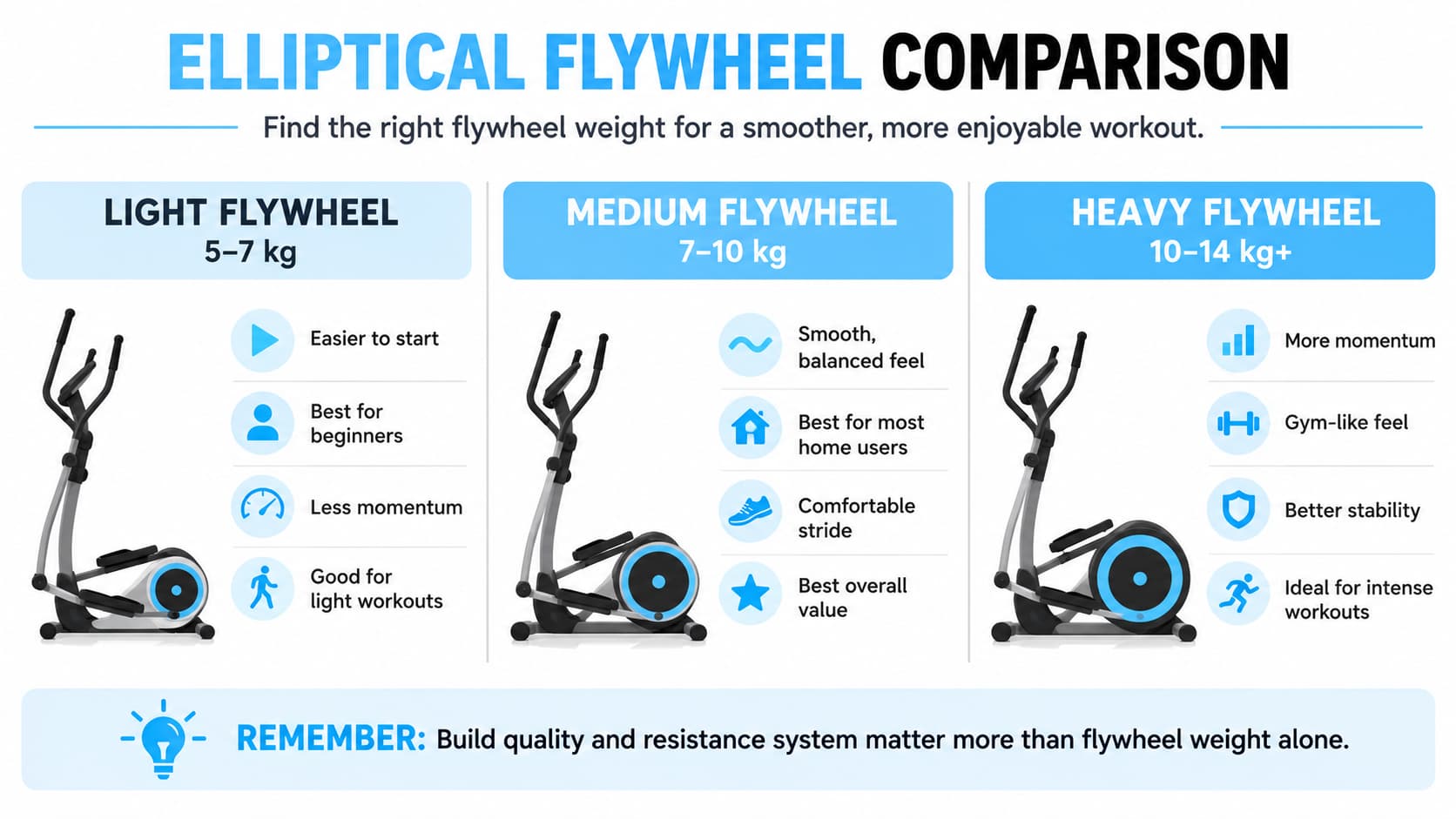
Here’s a simple guide to flywheel weight:
| User Type | Recommended Flywheel Weight | What It Feels Like |
| Beginners/walking | 5–7 kg | Light, easy movement |
| General home fitness | 7–10 kg | Smooth, balanced |
| Regular cardio users | 10–14 kg | More stable, gym-like feel |
| Heavy users/intense workouts | 14kg+ | Very stable, high resistance feel |
Light vs Heavy Flywheel
A lighter flywheel is easier to get moving, making it a good choice for beginners or light walking-style workouts. The motion feels less “weighted,” which some people like for casual exercise, but it can feel less steady at faster speeds or longer sessions.
A heavier flywheel keeps the pedals moving more smoothly and consistently. This creates a more controlled, gym-like stride, especially during longer workouts.
However, weight alone doesn’t guarantee quality.
Light flywheel tends to feel:
- Easier to start and stop
- Less resistance at low speeds
- Slightly less stable during fast movement
Heavy flywheel tends to feel:
- More momentum and flow
- Smoother transitions between steps
- Better stability at higher resistance
Here’s the key point. A poorly designed heavy flywheel can still feel jerky. Build quality matters just as much as weight.
Beginner vs Intermediate vs Advanced Users
Different users don’t just need different weights. They need different experiences from the machine.
Thinking about how you plan to use it will help you avoid overpaying or buying something too advanced.
Beginners should focus on:
- Smooth, simple movement that feels natural
- Low resistance options so you can ease into workouts
- A lighter flywheel range (often 5–7 kg is enough)
Beginners don’t need gym-level resistance. What matters most is building consistency without discomfort.
Intermediate users should look for:
- Balanced resistance that works for both light and moderate workouts
- A smoother stride that doesn’t feel jerky over time
- A flywheel of around 7–10 kg for most home setups
This is the “sweet spot” for many home users because it offers comfort and progression without being overbuilt.
Advanced users should look for:
- Strong, stable frame that doesn’t wobble
- Consistent resistance at higher speeds
- Longer stride smoothness during intense workouts
- Flywheels often 10–14 kg or higher
Advanced users benefit from heavier setups, but only when paired with strong build quality and a smooth resistance system.
Recommended Flywheel Weight by Budget
Your budget can also help you choose the right flywheel weight.
In general, more expensive ellipticals tend to offer smoother movement, stronger frames, and better resistance systems. However, you don’t always need the heaviest flywheel to get a good workout at home.
| Budget Range (AUD) | Recommended Flywheel Weight | What to Expect |
| Under $800 | 5–7 kg | Best for beginners, walking, and casual home workouts |
| $800–$2,000 | 7–10 kg | Smooth, balanced feel for most home users |
| $2,000+ | 10 kg+ | More stable, gym-like performance and stronger durability |
A mid-range elliptical with good build quality is usually the best value for most people. Instead of chasing the heaviest flywheel, focus on smooth movement, comfort, and stability.
What Matters More Than Flywheel Weight
Flywheel weight is helpful, but it’s not the most important thing when choosing an elliptical.
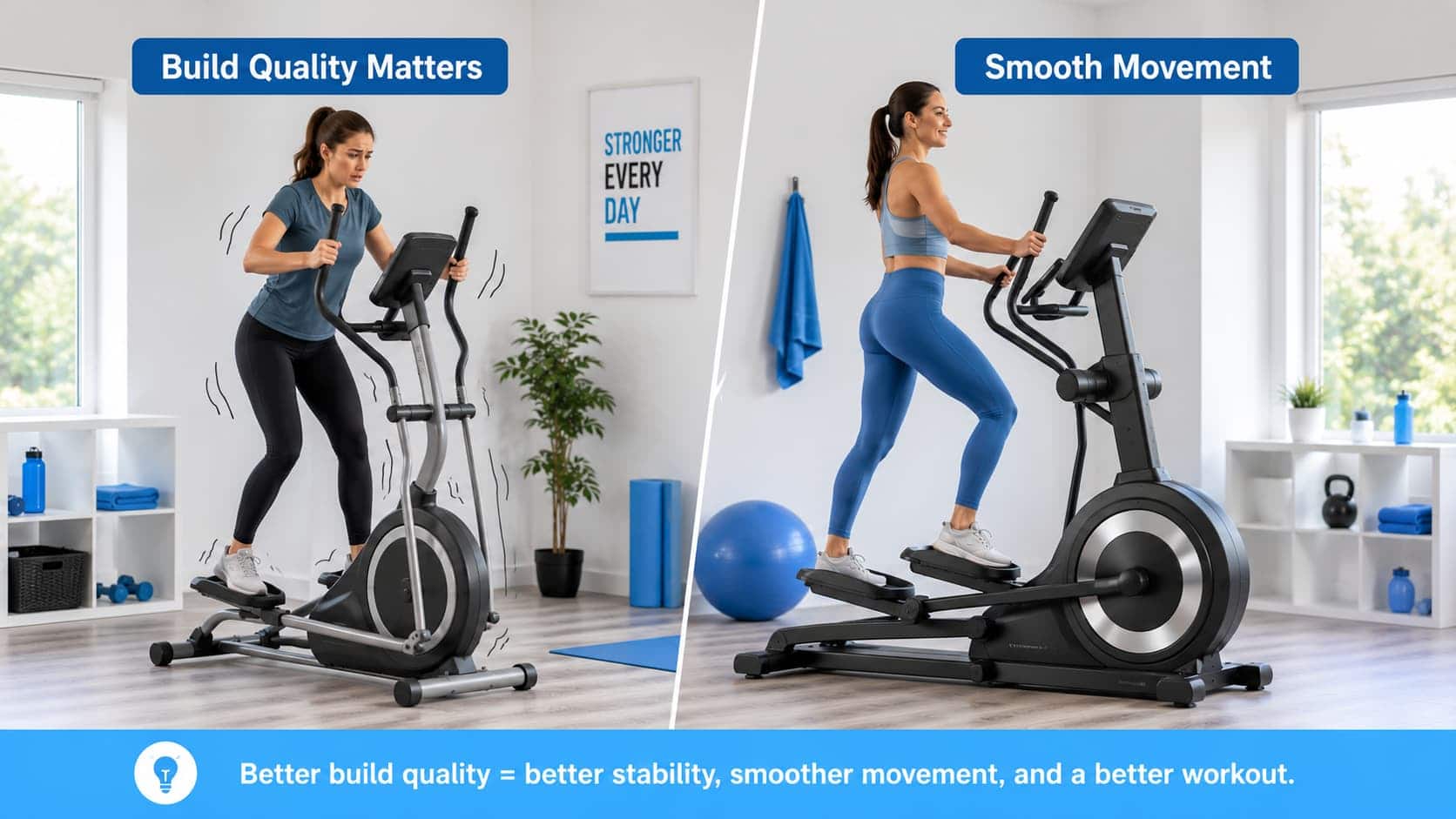
In many cases, other features have a bigger impact on how smooth, stable, and comfortable the machine feels. This is why two ellipticals with the same flywheel weight can feel completely different.
Here’s what matters even more:
- Resistance system type: Magnetic resistance is usually smoother, quieter, and more consistent than basic systems.
- Stride length: A longer stride feels more natural and comfortable, especially for taller users.
- Machine frame stability: A solid, well-built frame reduces wobbling during workouts.
- Pedal smoothness: Well-designed pedals improve comfort and reduce joint strain.
- Brand build quality: Better brands usually use higher-quality parts, which improves overall feel and durability.
All of these factors work together to shape your workout experience. A well-built 8 kg flywheel machine can easily feel better than a poorly designed, heavier one.
That’s why it’s important to look beyond just the number on the spec sheet.
Common Mistakes When Choosing Elliptical Flywheel Weight
Many people focus too much on flywheel weight when buying an elliptical and end up choosing the wrong machine for their needs.
While it’s an important detail, it shouldn’t be the only thing you look at. Understanding these common mistakes can help you make a smarter choice.
Here are the biggest mistakes to avoid:
- Thinking that heavier always means better. A heavier flywheel doesn’t guarantee a smoother workout. A well-designed lighter system may feel better than a poorly built heavy one.
- Ignoring stride length. If the stride is too short or uncomfortable, no flywheel weight will fix it. Always match the elliptical stride length to your body.
- Buying based on specs only. Numbers don’t always reflect the real feel. Two machines with the same specs can feel very different in use.
- Not testing smoothness. If possible, always test how the machine moves. Smooth, natural motion matters more than specs on paper.
Quick Buying Checklist
Before you buy an elliptical, it helps to run through a quick checklist. This keeps you from getting distracted by specs like flywheel weight alone and helps you focus on how the machine actually feels to use.
Here are the key things to check:
- Is the motion smooth? The movement should feel steady and natural, not jerky or stop-start. Smooth motion is one of the best signs of a good machine.
- Does resistance adjust easily? You should be able to change resistance without sudden jumps. It should feel gradual and controlled.
- Is the stride length comfortable? Your stride should feel natural, not cramped or overstretched. Comfort here makes a big difference over longer workouts.
- Does it feel stable at higher speeds? A good elliptical won’t wobble or shake when you increase pace or resistance.
If a machine passes all four checks, it’s usually a solid choice, no matter what the flywheel weight says.
Final Verdict: What is a Good Elliptical Flywheel Weight?
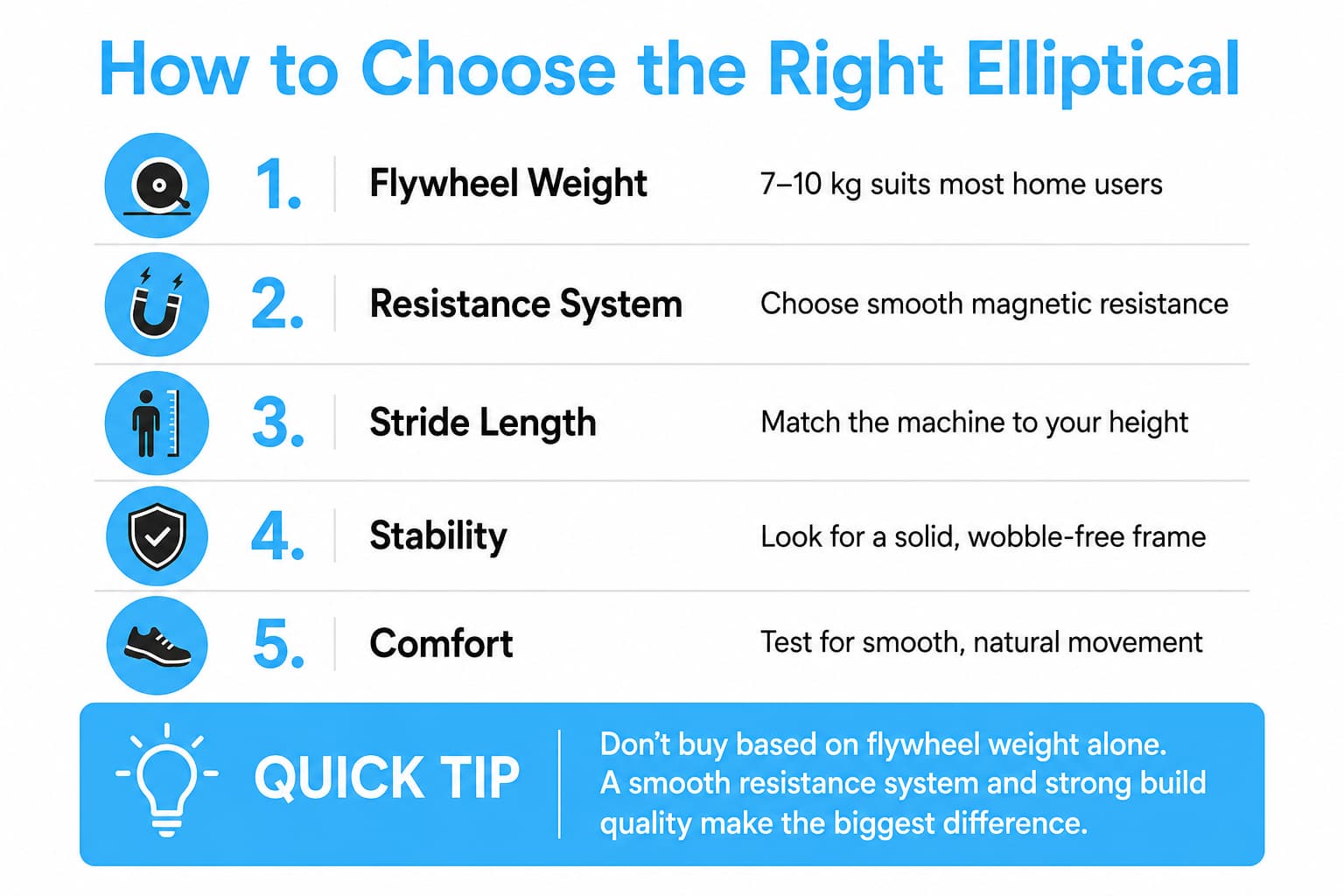
For most home users, the sweet spot is between 7 and 10 kg. This range usually gives you a smooth, natural stride without making the machine feel too heavy or overbuilt.
But remember, the number alone doesn’t tell the full story. What matters more is how the machine feels when you use it: smoothness, stability, and build quality matter more than weight.
If it feels comfortable and steady, you’re already on the right track. Trust your movement, not just the specs on paper.
When you’re ready to compare real options, check our list of the best elliptical machines in Australia.
Related Questions
1. What flywheel weight is best for beginners?
A 5-7 kg flywheel is usually enough for beginners. It provides smooth, comfortable movement without feeling too heavy or difficult to use.
2. Is a 20 lb flywheel good for an elliptical?
Yes, a 20 lb (around 9 kg) flywheel is a great middle-ground option for most home users. It usually offers a smooth and balanced workout feel.
3. What is the difference between flywheel weight and resistance?
Flywheel weight affects how smooth and stable the motion feels, while resistance controls how hard the workout is. They work together, but they are not the same thing.