Treadmill deck cushioning is a shock-absorption system built under the running belt to lower the impact force on your body when you step.
It sits between the running deck and the treadmill frame, helping absorb some of the force that would otherwise travel through your knees, ankles, and hips. The goal is to give you a smoother, more comfortable run or walk while still keeping the surface steady.
However, better cushioning does not always mean softer cushioning. The right feel depends on whether you walk, jog, run fast, or train often.
Read on to learn what matters most.
- What Is Treadmill Deck Cushioning?
- How Does Treadmill Deck Cushioning Work?
- What Types of Treadmill Cushioning Systems Are Available?
- Does Treadmill Cushioning Really Protect Your Joints?
- Is Treadmill Cushioning More Important for Walking or Running?
- Is Softer Cushioning Always Better?
- Does More Expensive Mean Better Cushioning?
- What Else Should You Consider Besides Cushioning?
- Who Should Prioritise Good Treadmill Cushioning?
- Choose Treadmill Cushioning That Matches Your Training
- Related Questions
What Is Treadmill Deck Cushioning?
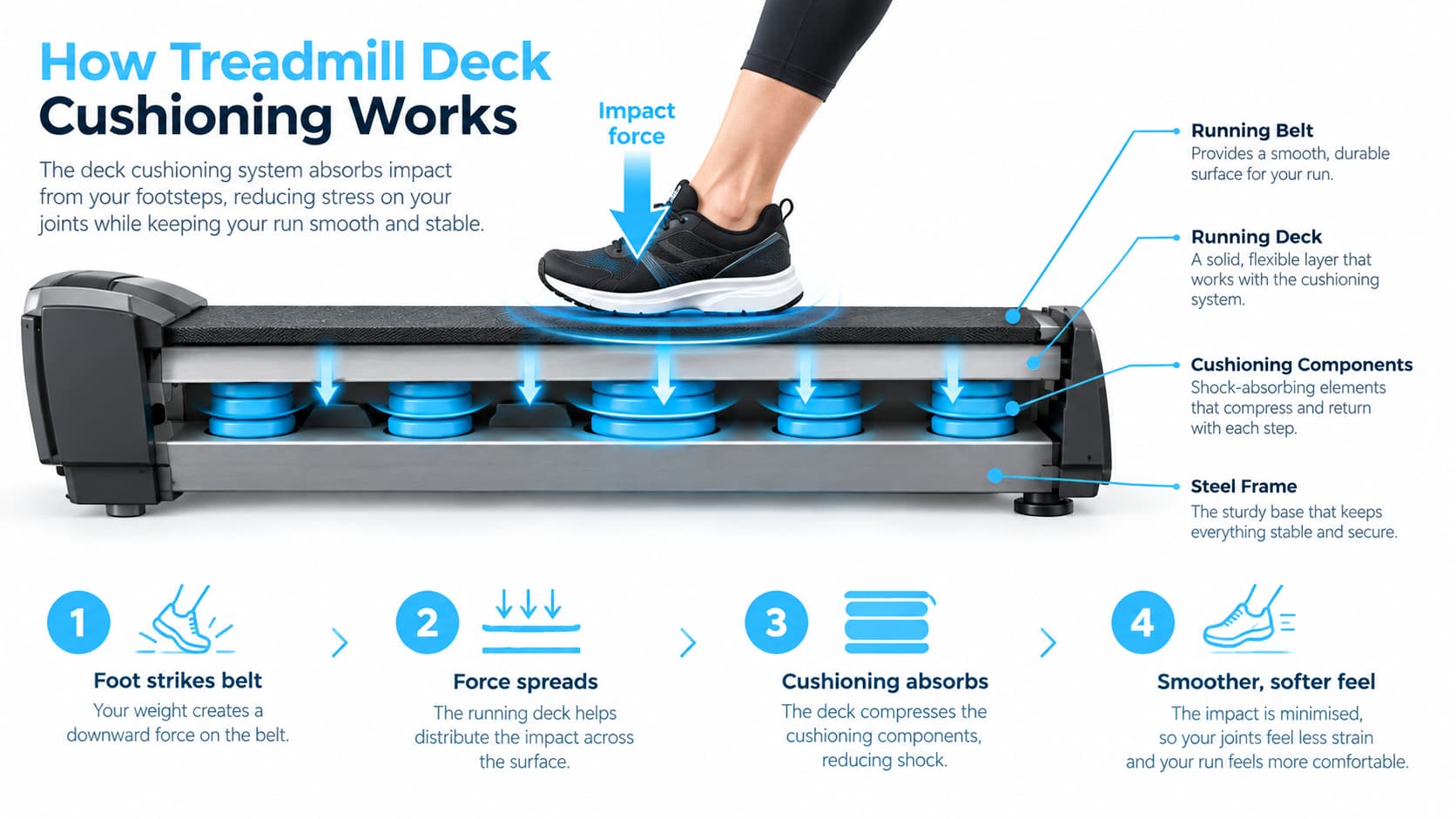
Treadmill deck cushioning helps make each step feel softer and more comfortable. To understand it better, here are a few key parts of a treadmill:
- Running belt: The moving surface you walk or run on.
- Running deck: The solid board underneath the belt.
- Steel frame: The strong base that supports the machine.
- Cushioning parts: Rubber, springs, or shock absorbers placed between the deck and frame.
One thing to know: the cushioning isn’t in the belt itself. It sits under the deck, inside the frame.
If you’re comparing models, it’s also worth checking what treadmill belt size you need, since people often confuse the belt with the deck.
How Does Treadmill Deck Cushioning Work?
Treadmill deck cushioning works by letting the deck compress slightly when your foot lands. This helps absorb shock before it travels through your legs.
Most systems use parts such as:
- Elastomers: firm rubber-like pieces that flex under pressure
- Rubber grommets: small supports that soften impact
- Air shock systems: air-filled parts that compress as you step
This can feel much gentler than running on concrete, which has very little give.
Some treadmills also use zoned cushioning. This means different parts of the deck feel different:
- Soft landing zone: cushions your foot strike.
- Neutral transition zone: supports your stride.
- Firmer push-off zone: gives a steadier feel as you move forward.
You may also see fixed or adjustable cushioning. Fixed cushioning has one set feel and is common on entry-level treadmills. Adjustable cushioning lets you choose a softer or firmer feel, often on premium models.
What Types of Treadmill Cushioning Systems Are Available?
Treadmill cushioning can vary from one machine to another. Some systems feel soft and forgiving, while others feel firmer and more stable.
The main types include:
- Basic rubber bumpers: Simple rubber supports placed under the deck. They help reduce some impact, usually giving a firmer feel. You’ll often find them on budget treadmills made for walking or light jogging.
- Multi-density elastomers: Rubber-like materials with different firmness levels. Some areas may feel softer for landing, while others feel firmer for push-off. These give a smoother, more balanced running feel.
- Air cushioning systems: Air-filled parts that compress when your foot lands. They can feel softer and bouncier, which some users find more comfortable.
- Adjustable cushioning systems: These let you change how firm or soft the deck feels. They’re useful if more than one person uses the treadmill, or if you switch between walking, jogging, and running.
Does Treadmill Cushioning Really Protect Your Joints?
Yes, treadmill cushioning can help reduce the impact on your joints, but it is not a magic fix.
When your foot lands, some of that force travels through your knees, ankles, hips, and lower back. A cushioned treadmill deck helps absorb part of that shock, which can make walking or running feel easier on your body.
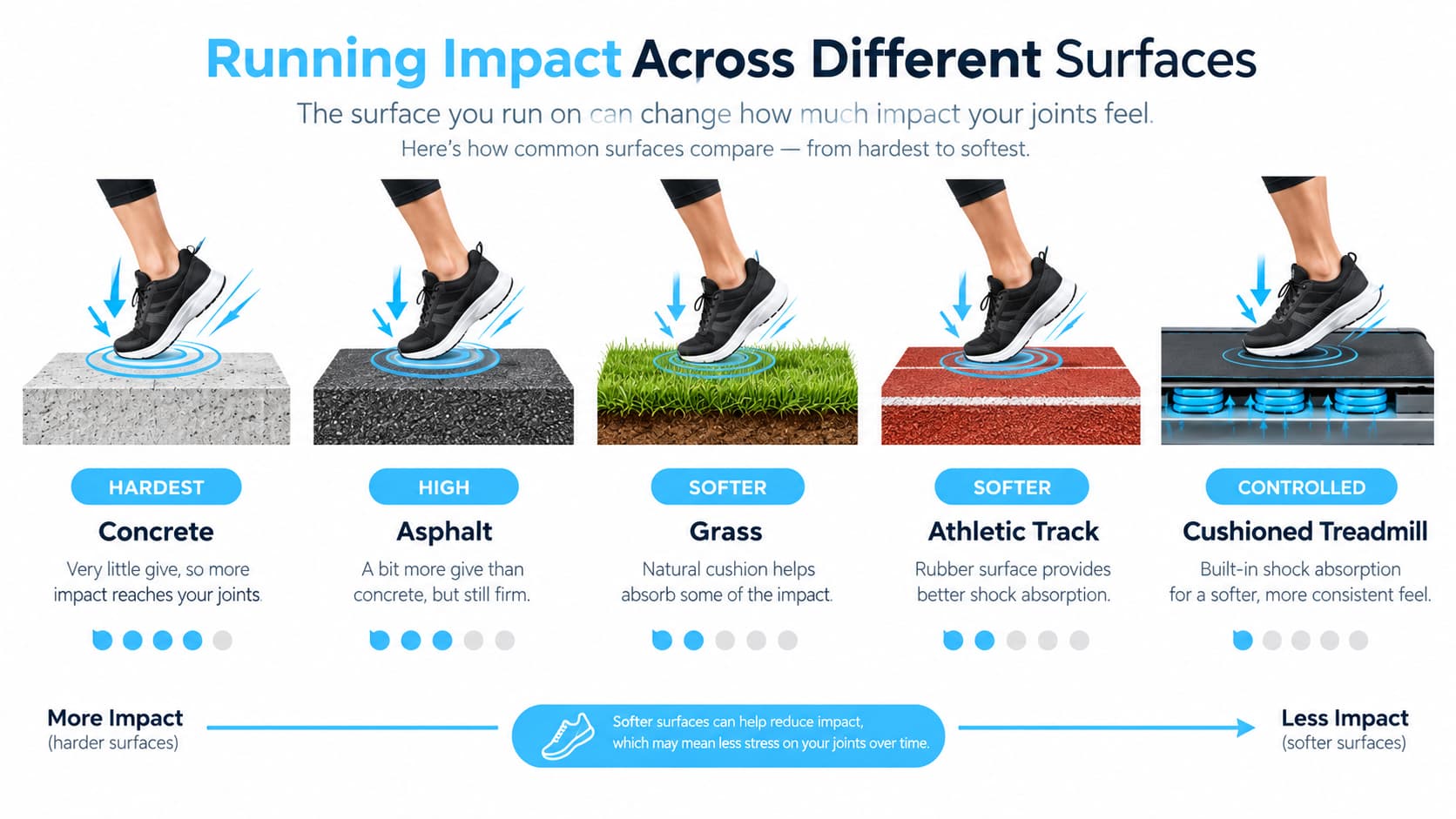
Compared with hard outdoor surfaces, a treadmill usually has more give. Here is a simple comparison guide:
- Concrete: very hard, high impact
- Asphalt: slightly softer than concrete
- Grass: softer, but can be uneven
- Athletic track: cushioned and more forgiving
- Treadmill: controlled surface with built-in shock absorption
Cushioning does not remove all injury risk, though. Your running form, shoes, body weight, and how much you train all matter, too. A cushioned deck can help, but it works best with smart training habits.
Is Treadmill Cushioning More Important for Walking or Running?
Treadmill cushioning matters for both walking and running, but it becomes more important as impact increases.
1. Walking
Walking creates less impact than running, so you may not need the most advanced cushioning system. For most walkers, the main benefit is comfort. A cushioned deck can make longer walks feel smoother and easier on your feet, knees, and hips.
For walking, basic cushioning is often enough, especially if you use the treadmill at a steady pace. Many affordable models include fixed cushioning that suits walking and light jogging.
If that sounds like your goal, this guide to the best treadmills under $1000 in Australia may help.
2. Running
Running creates higher impact forces because both feet leave the belt between steps. This is where cushioning becomes much more noticeable.
If you run often, premium cushioning can feel smoother, more stable, and more supportive over time.
Is Softer Cushioning Always Better?
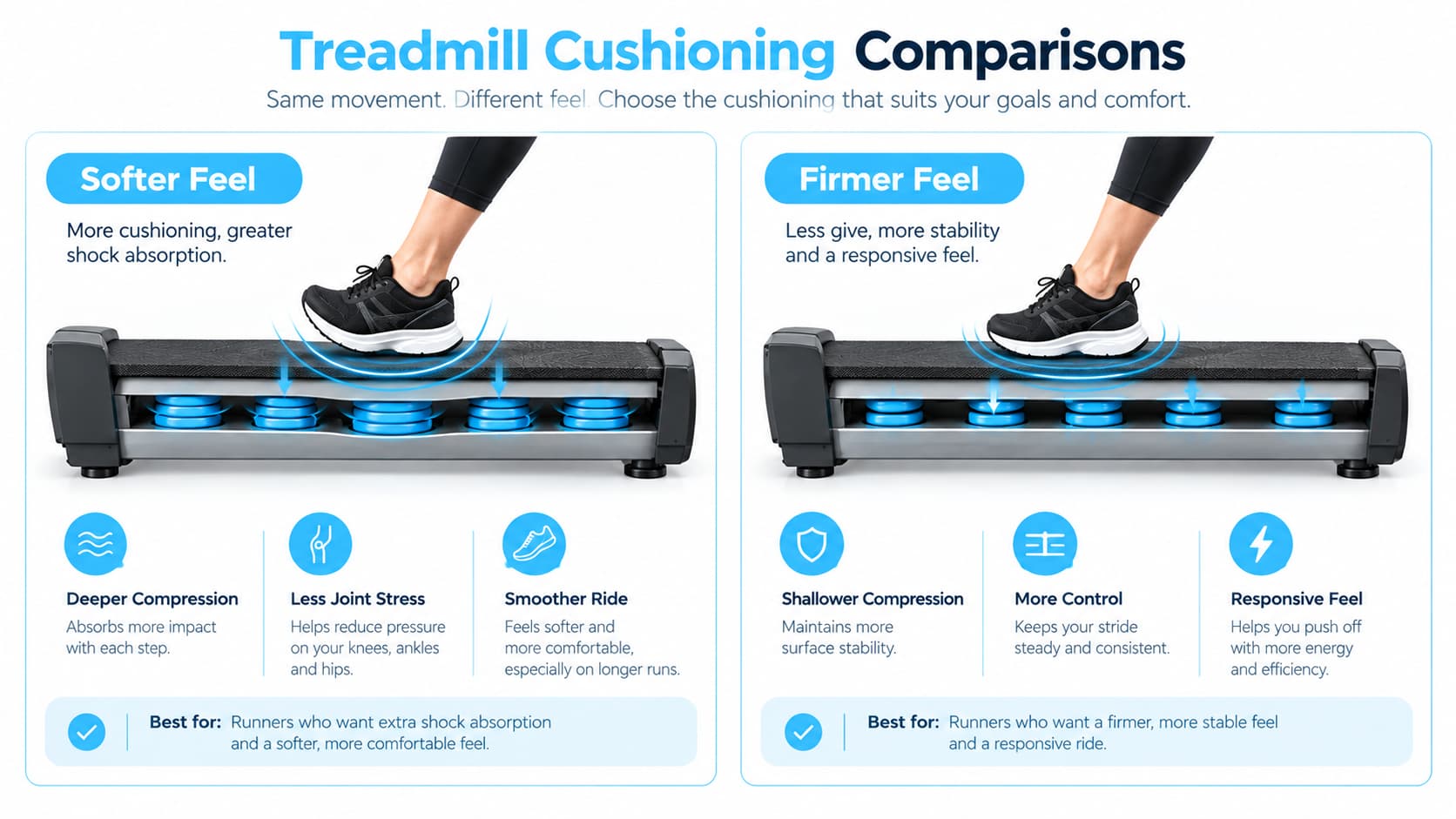
Not always. It is easy to think the softest treadmill deck must be the best, but that is not true for everyone. Softer cushioning can feel great, especially if comfort is your main goal, but it may not suit every workout.
1. Softer Cushioning
Softer cushioning gives the deck more “give” when your foot lands. This can make walking, jogging, or recovery runs feel more comfortable, especially if your joints feel sore after training.
| Pros | Cons |
| Comfortable underfoot | Can feel a bit unstable |
| Reduces the feeling of impact | May feel less responsive when you run faster |
| Good for easy walks, light jogs, or recovery sessions |
2. Firmer Cushioning
Firmer cushioning has less “sink” under your feet. It may not feel as soft, but it can give you a steadier surface, which many runners prefer when picking up speed.
| Pros | Cons |
| Better energy return | Creates more impact than softer decks |
| Feels more stable | Can feel less forgiving on tired legs |
| Often preferred for faster running |
The best choice depends on how you use the treadmill. If you walk or recover, softer cushioning may feel better. If you run faster, a firmer, steadier deck may suit you more. Choose based on your running style, not just softness.
Does More Expensive Mean Better Cushioning?
Yes, more expensive treadmills often have better cushioning than cheap basic models. They might use tougher materials, better shock absorbers, or custom settings to lessen joint impact.
However, a higher price doesn’t always mean the deck will feel softer, or that it will be better for every runner.
Here’s how cushioning varies by price tier:
| Price Tier | Typical Cushioning | What It Feels Like |
| Budget ($500 – $1,200 AUD) | Basic elastomer blocks or simple foam under a thinner deck | Absorbs some shock, but can feel firm or uneven. Parts may wear faster with heavy running. |
| Mid-range ($1,200 – $2,500 AUD) | Adjustable dampeners or variable-response cushioning | Smoother, more stable, and better for regular running. |
| High-End / Premium ($2,500 – $5,000+ AUD) | Rubber slats with little or no deck cushioning | Very durable, but often firmer, like outdoor pavement. |
Cushioning is just one feature that gets better as the price goes up. Motor strength, running surface size, frame durability, and overall build quality are important, too. If you are looking at high-end models, check out our guide to the best treadmills in Australia.
What Else Should You Consider Besides Cushioning?
Cushioning is not the only factor to consider when choosing a treadmill. A treadmill can have a soft deck and still feel wrong if it is too small, too weak, or hard to fit in your home.
1. Deck Size
Deck size affects how natural your stride feels. Taller runners often need a longer deck because they take longer steps, especially when running at faster speeds. If the belt is too short or narrow, you may feel cramped or nervous while running.
To understand the difference between width and length, read our guide on treadmill belt width vs length.
2. Available Space
A bigger deck usually means a bigger treadmill. Before buying, check your floor space, ceiling height, and room around the machine. You need enough space to step on and off safely.
This guide explains how much treadmill space you need.
3. Manual vs Motorised Treadmills
Motorised treadmills usually have more advanced cushioning systems because the frame and deck are built for powered movement. Manual treadmills often use simpler deck designs.
Check out this previous post to learn more about the key differences between manual and motorised treadmills.
Who Should Prioritise Good Treadmill Cushioning?
Good cushioning is worth considering if you want a smoother, gentler treadmill feel. It may be especially helpful for:
- Older adults who want less impact on their joints
- Beginners building fitness slowly
- Heavier users who place more force on the deck
- Long-distance runners spending more time on the treadmill
- People returning from injury who want a softer surface
- Users replacing outdoor road running with indoor training
That said, not everyone needs the softest deck. Competitive runners may prefer firmer cushioning because it can feel more like running outside on roads or tracks.
Choose Treadmill Cushioning That Matches Your Training
Treadmill deck cushioning can make a big difference to how your walks or runs feel. It can help the belt feel smoother, more comfortable, and easier on your joints.
However, it is not the only thing you should look at. You also need to assess the deck size, how much room you have at home, how often you will use the treadmill, and how well the machine is built.
Also, remember that the softest deck is not always the best. If you mostly walk, basic cushioning may be fine. If you run often, you may want something stronger and more stable.
Always choose what suits your training style.
Related Questions
1. Does treadmill cushioning wear out?
Treadmill cushioning can wear out over time, especially if you or heavier runners use the machine often. As the cushioning parts age, the deck may start to feel harder, noisier, or less comfortable.
2. Can treadmill cushioning be replaced?
It depends on the treadmill model and how the cushioning system is built. Basic rubber parts or deck supports may be replaceable, but more complex systems may need servicing by the manufacturer or a treadmill technician.
3. Is a cushioned treadmill better for bad knees?
A cushioned treadmill may feel easier on bad knees because it can reduce some impact from each step. However, it will not fix knee pain on its own. It is better to wear the right shoes, train gently, and speak with a health professional if pain continues.
- What Is Treadmill Deck Cushioning and Does It Really Protect Your Joints? - 21 September 2026
- Exercise Bike Flywheel Weight: How to Choose the Right Weight - 27 August 2026
- What Elliptical Stride Length Do I Need? (Comprehensive Sizing Chart by Height) - 26 August 2026