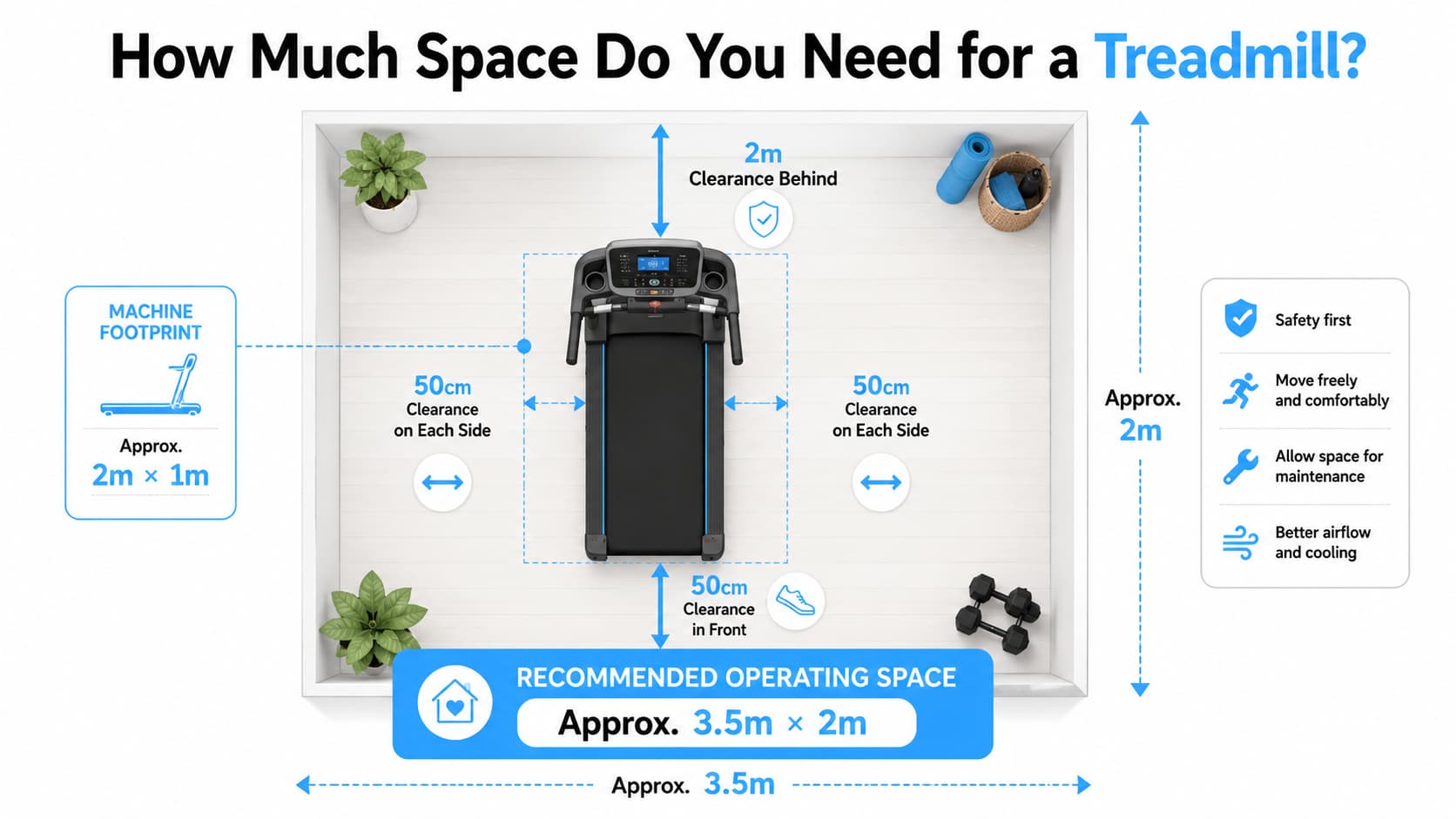
A standard treadmill requires around 3.5 m × 2 m of space while in use. While most home treadmills have a footprint of only about 2 m × 1 m, you’ll also need extra clearance behind, beside, and in front of the machine for safe use.
Many buyers make the mistake of measuring only the treadmill itself and forget to allow enough operating space, which can make workout sessions uncomfortable or even unsafe. Whether you’re setting up a home gym or fitting a treadmill into a spare room or apartment, this guide will help you measure correctly and choose the right setup.
Read on to learn exactly how much treadmill space you’ll need.
Quick Answer
A standard home treadmill needs about 3.5 m long by 2 m wide while in use. Although the treadmill itself usually measures around 2 m × 1 m, you’ll also need extra clearance around the machine for safe and comfortable use. Don’t forget to check your ceiling height, especially if you plan to use the treadmill at an incline.
| Requirement | Space Needed |
|---|---|
| Machine footprint | Approx. 2 m × 1 m |
| Behind treadmill | 2 m clearance |
| Each side | 50 cm clearance |
| Front | 50 cm clearance |
| Total area | Approx. 3.5 m × 2 m |
| Ceiling | 30–50 cm head clearance |
- Quick Answer
- Why Measuring Treadmill Space Matters
- How Much Space Does a Treadmill Actually Take Up?
- The Treadmill Clearance Rules
- Recommended Room Size for Different Treadmill Types
- Are Folding Treadmills Better for Small Homes?
- Other Treadmill Buying Considerations
- Measure Your Space Before Buying a Treadmill
- Related Questions
Why Measuring Treadmill Space Matters
Measuring your available space before buying a treadmill can save you time, money, and frustration.
It’s not just about making sure the machine fits. It also needs enough room to be used safely and comfortably. A little planning now can help you avoid problems later.
Here are a few reasons why measuring your treadmill space is important:
- Safety: Leave enough clearance around the treadmill to reduce the risk of injury if you lose your balance or need to step off quickly.
- Comfort: Extra space makes it easier to get on and off the treadmill without feeling cramped.
- Proper airflow: Keeping space around the machine helps the motor stay cool and perform at its best.
- Easier maintenance: You’ll have better access for cleaning, servicing, and moving the treadmill if needed.
- Prevent expensive buying mistakes: Measuring your room first helps ensure the treadmill fits your home before you buy it.
The overall size of the treadmill is only one specification to consider. Learn what every treadmill specification means in our complete guide to treadmill specifications.
How Much Space Does a Treadmill Actually Take Up?
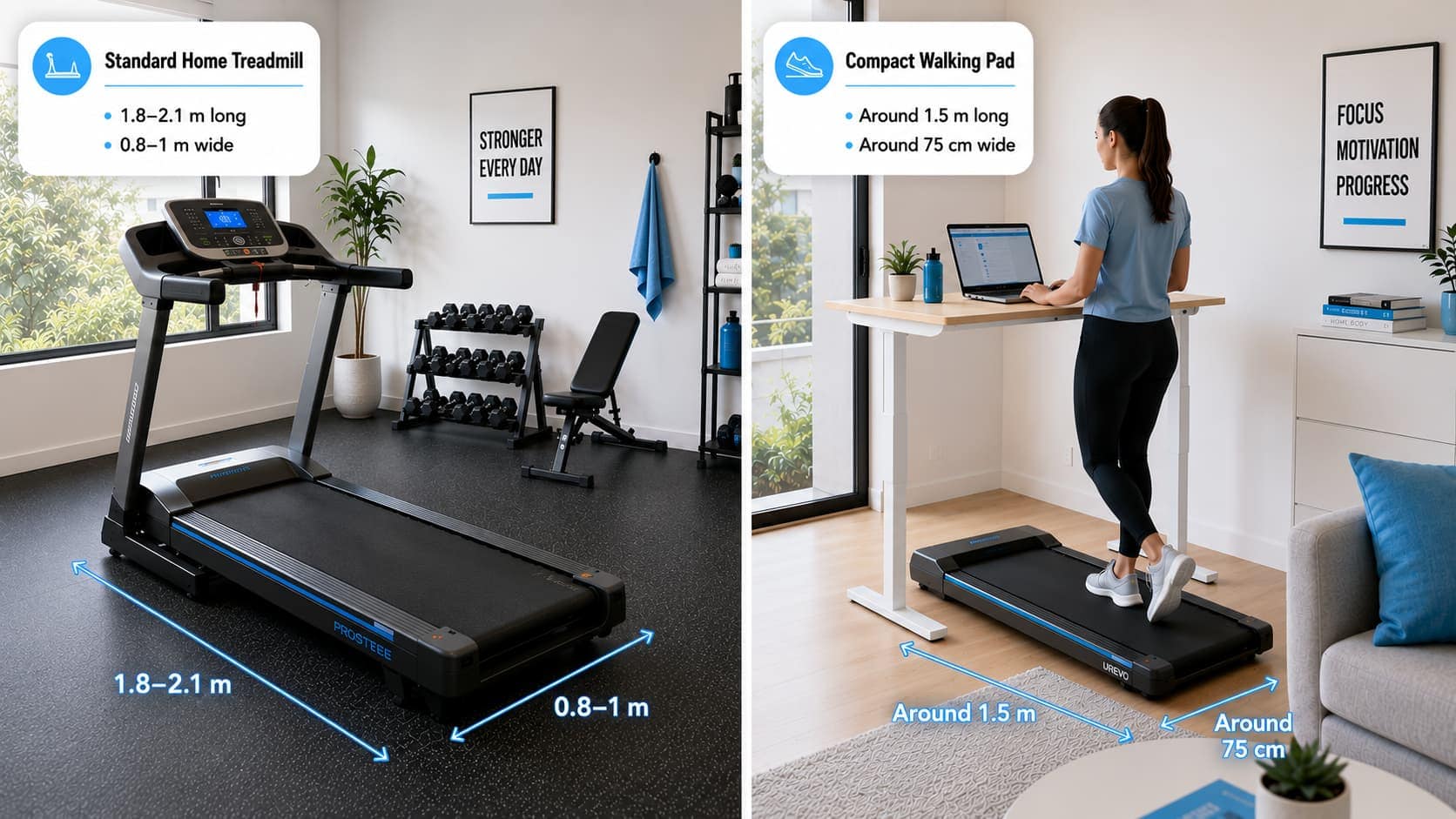
The amount of floor space you need depends on the type of treadmill you choose. Remember, these measurements are only the machine’s footprint. You’ll still need extra clearance around the treadmill for safe and comfortable use.
1. Standard Home Treadmills
Most home treadmills measure approximately:
- 1.8–2.1 m long
- 0.8–1 m wide
Standard treadmills are the best choice for people who want to walk, jog, or run regularly at home. They usually have larger running decks, stronger motors, and more features.
2. Compact Walking Pads
Walking pads suit smaller spaces and typically measure:
- Around 1.5 m long
- Around 75 cm wide
Walking pads are ideal for walking rather than running, making them a popular choice for apartments and home offices. Wondering if a compact treadmill is enough? Our guide on foldable mini treadmills for small spaces has more details.
The Treadmill Clearance Rules
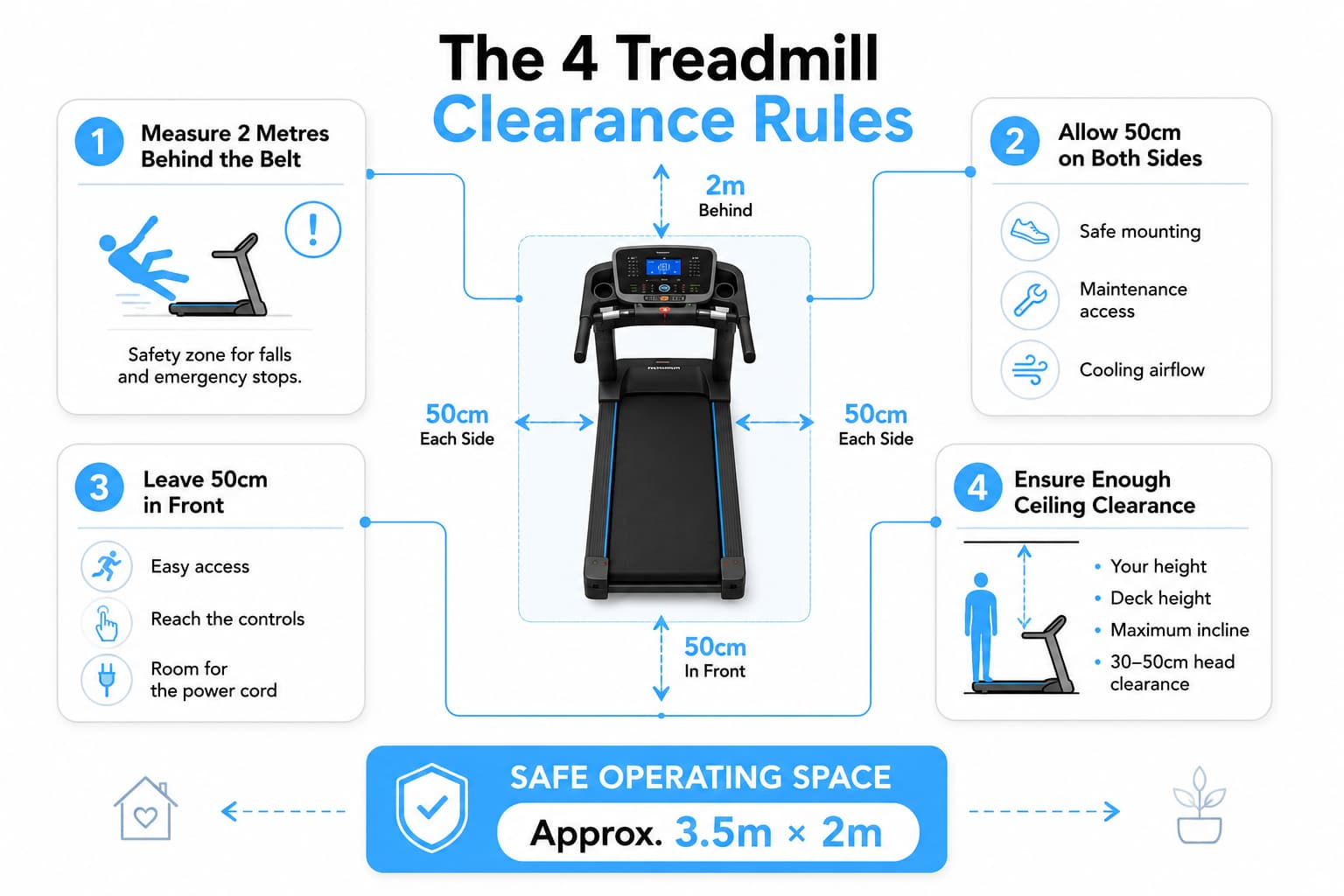
Leaving enough space around your treadmill is just as important as choosing the right machine. These clearance guidelines help keep you safe and make your treadmill easier to use and maintain.
1. Measure 2 Metres Behind the Belt
The space behind the treadmill is the most important safety zone. Most manufacturers recommend leaving 1.5 to 2 metres clear behind the belt in case you lose your balance or need to make an emergency stop.
This empty space can help reduce the risk of injury if you fall while running.
2. Allow 50 cm on Both Sides
Allow at least 50 cm on each side of the treadmill for:
- Safe mounting and dismounting
- Easy access for cleaning and maintenance
- Proper airflow to help keep the motor cool
3. Leave 50 cm in Front
Leave 50 cm in front of the console so you can:
- Step onto the treadmill comfortably
- Reach the controls with ease
- Allow room for the power cord and plug
4. Ensure Enough Ceiling Clearance
When measuring vertical space, add together your:
- Height
- Treadmill deck height
- Maximum incline
- An extra 30 to 50 cm of head clearance
For example, if you’re 175 cm tall and your treadmill raises you about 30 cm at full incline, a ceiling height of around 2.35 m will give you enough room to exercise comfortably.
Recommended Room Size for Different Treadmill Types
The right treadmill for your home depends on how much space you have available. Here’s a quick guide to help you choose:
| Treadmill Type | Recommended Space |
| Walking Pad | Smaller rooms |
| Folding Treadmill | Medium rooms |
| Full-size Running Treadmill | Larger home gyms |
Walking pads are a great option for apartments or home offices, while folding treadmills offer a good balance between performance and space-saving storage. If you have a dedicated home gym, a full-size running treadmill provides the most features and running comfort.
Looking for an affordable option? Check out our guide on the best treadmills under $1000 in Australia.
Are Folding Treadmills Better for Small Homes?
Folding treadmills are a popular choice if you’re short on space, but it’s important to understand what they can and can’t do.
While they take up less room when stored, they still need the same clearance as a standard treadmill when you’re using them.
When choosing a folding treadmill, remember:
- Storage footprint: Smaller when folded, making it easier to store.
- Operating footprint: Requires the same safety space during use.
- What changes: The deck folds upright for compact storage.
- What doesn’t: You still need enough room around the treadmill to exercise safely.
Remember, folding saves storage space, not operating space. Read our article on the advantages and disadvantages of folding treadmills for more information.
Other Treadmill Buying Considerations
Available space is important, but it’s only one factor to think about before buying a treadmill. Choosing the right model depends on your fitness goals, body size, and how you plan to use it.
Consider these factors as well:
- Running belt size: Make sure the belt is long and wide enough for your stride. Learn more in our treadmill belt width vs length guide.
- User height: Taller users often need a longer running deck.
- Intended workout: Walking, jogging, and running all have different requirements.
- Machine dimensions: Check both the treadmill’s footprint and its in-use space.
- Foldability: A folding model is easier to store but still needs the same operating clearance.
Considering these factors alongside your available space will help you choose a treadmill that fits both your home and your fitness goals.
Measure Your Space Before Buying a Treadmill
Before buying a treadmill, take the time to measure your room carefully. As a general guide, plan for approximately 3.5 m × 2 m of operating space so you have enough room to use the treadmill safely and comfortably.
If you’re considering a folding model, remember that it saves storage space but still requires the same safety clearance when you’re exercising. It’s also worth thinking about your workout goals, available space, and key machine specifications before deciding.
Ready to compare your options? Explore our list of the best treadmills to buy in Australia to find the right treadmill for your home.
Related Questions
1. Can you put a treadmill against a wall?
Yes, but you should still maintain at least 1.5-2 metres of space behind the treadmill for safety. This rear clearance helps reduce the risk of injury if you lose your balance or need to make an emergency stop.
2. Is a folding treadmill better for small homes?
A folding treadmill is easier to store because the running deck folds upright when it’s not in use. However, it still requires the same operating space and safety clearance as a standard treadmill during your workout.
3. Can I use a treadmill in an apartment?
Yes, as long as your apartment has enough floor space and ceiling height, plus a floor that can support the treadmill’s weight. Choosing a compact or folding model and using a treadmill mat can also help reduce noise and minimise disturbance to neighbours.
4. How high should my ceiling be for a treadmill?
Add your height, the treadmill deck height, the maximum incline height, and an extra 30-50 cm of head clearance. This simple calculation helps ensure you have enough vertical space to exercise safely and comfortably.

- Why Does My Skin Itch After Using a Massage Gun? - 23 September 2026
- Adjustable vs Fixed Stride Ellipticals: Which Is Better? - 22 September 2026
- What Is Treadmill Deck Cushioning and Does It Really Protect Your Joints? - 21 September 2026