Music affects your workout performance by making exercise feel easier, increasing your motivation, and helping you last longer.
Studies show it can improve results by up to 15% and reduce perceived effort (RPE) by around 12%. It works through psychological, physiological, and psychophysical mechanisms.
The benefits are strongest when you choose your own music and match it to your workout intensity. From boosting motivation to improving movement efficiency, the right playlist can transform your session.
In this article, you’ll learn the science, key benefits, and how to pick the best music.
Why Music is a Natural Workout Enhancer
People often refer to music as a natural workout enhancer because it acts as an ergogenic aid. It means it is something that helps improve physical performance.
Like caffeine or supplements, music can give you a boost but without the side effects. Studies show it can help increase endurance, improve motivation, and even boost power during exercise.
Music works in several ways at the same time:
- Psychological (The Mindset): Lifts your mood, increases motivation, and helps you stay focused.
- Psychophysical (The Perception): Makes exercise feel easier by reducing the perceived effort.
- Physiological (The Body): Affects heart rate, oxygen use, and body movement efficiency.
Because music affects both your mind and body, it can make workouts feel more enjoyable and less tiring. These combined effects are why music can significantly improve your workout performance.
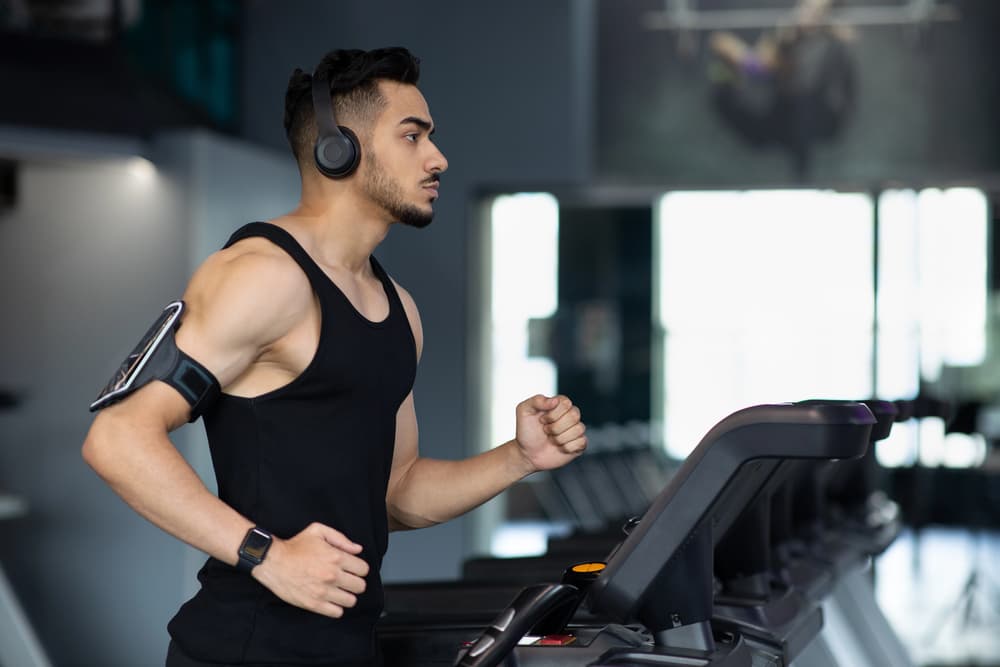
Psychological Benefits of Music During Exercise
Music can have a powerful effect on your mind during a workout, helping you stay motivated and positive.
- Boosts Motivation and Improves Mood. Music activates your brain’s reward system, releasing feel-good chemicals like dopamine and endorphins. This can lead to higher motivation, better mood, and a stronger drive to keep going.
- Reduces Focus on Fatigue. Music helps distract you from discomfort by shifting your focus away from muscle soreness, heavy breathing, and fatigue. This makes your workout feel easier and helps you last longer.
- Helps You Enter a Flow State. The right playlist can help you enter a flow state, where you feel focused, time moves faster, and your movements feel smoother. When this happens, workouts feel more enjoyable, and your performance often improves.
Psychophysical Benefits of Music During Exercise
Music doesn’t just change how you feel. It also changes how hard your workout feels. It’s called the psychophysical effect.
- Lowers Perceived Effort. Listening to music can reduce the rate of perceived exertion (RPE) of exercise by up to 12%. Even if you’re working at the same intensity, it can feel easier. This often leads to longer workouts and higher training intensity.
- Increases Pain Tolerance. Music distracts you from discomfort and reduces awareness of fatigue and muscle burn. This helps you push harder and keep going for longer.
Physiological Benefits of Music During Exercise
Music also helps your body perform better during and after exercise.
- Improves Movement Efficiency. Rhythmic entrainment occurs when your movements synchronize with the beat of the music. This is common in running cadence, cycling pedal strokes, and rowing rhythm. Moving in sync with music can reduce oxygen use by up to 7%, helping you move more efficiently.
- Boosts Power and Heart Rate. Fast-tempo music (120–170+ BPM) can increase your heart rate, energy and alertness, and muscle activation. This makes it ideal for intense workouts like sprints or weightlifting.
- Supports Faster Recovery. Slow, calming music during cool-downs can help lower cortisol levels, promote relaxation, and speed up heart rate recovery. Tempos around 60–90 BPM are best for helping your body recover after exercise.

How to Pick the Best Music for Optimum Workout Performance
Not all music works the same, though. Its effectiveness depends on a few key factors. Choosing the right mix of these factors can make your workouts more effective and enjoyable.
Here are some of them:
- Choose music you enjoy: Self-selected music works best because your favourite songs boost motivation and enjoyment, while music you don’t like can reduce performance.
- Set the right volume: Louder music can increase energy and intensity, but if it’s too loud, it may distract you during technical or skill-based movements.
- Use music at the right time: Play music before workouts to boost motivation, during workouts to maintain effort, and after workouts to support recovery.
- Match the tempo to your workout: Around 120–140 beats per minute (BPM) works well for cardio, 140–160 BPM is ideal for running, and 60–90 BPM suits warm-ups and cool-downs. Here’s a table showing the best music tempo for various workouts:
| Workout Type | Recommended Tempo (BPM) | Primary Benefit |
| High Intensity (HIIT/Sprints) | 140–180+ BPM | Maximises energy, power output, and intensity |
| Weightlifting (Heavy Sets) | 120–150 BPM | Boosts focus, aggression, and lifting performance |
| Strength Endurance (High Reps) | 120–140 BPM | Maintains rhythm and workout pace |
| Treadmill Running | 120–135 BPM | Helps maintain consistent speed and stride |
| Outdoor Running | 130–160 BPM | Supports pacing and improves endurance |
| Jogging/Light Running | 100–130 BPM | Encourages steady, sustainable cadence |
| Cycling (Indoor/Spin) | 120–150 BPM | Syncs pedal strokes and improves efficiency |
| Steady-State Cardio | 120–140 BPM | Supports rhythm, endurance, and consistency |
| Circuit Training | 120–150 BPM | Keeps energy high between exercises |
| Rowing | 110–140 BPM | Enhances stroke rhythm and efficiency |
| Walking | 90–120 BPM | Encourages steady movement and consistency |
| Warm-Up | 90–110 BPM | Gradually increases heart rate and readiness |
| Yoga/Stretching | 60–90 BPM | Promotes calm, focus, and flexibility |
| Cool-Down/Recovery | 60–90 BPM | Aids relaxation and faster heart rate recovery |
Build Your Playlist and Start Strong
Music is one of the simplest and most effective ways to improve your workout performance.
It helps you stay motivated, makes exercise feel easier, and improves how your body moves, helping you perform up to 15% better. When you choose your own music and match the tempo to your workout, you can train harder, last longer, and enjoy every session more.
Find time to build the right playlist and pair it with the best exercise equipment. With the right setup, you can turn any workout into a more powerful, fun, and engaging experience.
Related Questions
1. Can music help me exercise longer or harder?
Listening to music can lessen how hard a workout feels and increase your pain tolerance, helping you push harder and extend your sessions. The right playlist can make exercising feel more fun and less tiring.
2. What kind of music should I listen to for exercise?
Pick music you enjoy and match it to your activity. High-tempo tracks work best for cardio or HIIT, while slower, relaxing music is ideal for stretching, yoga, or cool-down sessions.