Your ideal treadmill belt size depends mainly on two factors: your height and whether you plan to walk, jog, or run. In general, the average treadmill belt size is around 51 cm × 152 cm (20” × 60”), which suits most runners and taller users.
Buying the wrong treadmill size is one of the fastest ways to waste money on a machine that feels cramped, awkward, and uncomfortable.
The good news is that finding the right treadmill belt size is simpler than it seems. This guide will help you quickly find the right fit.
Still deciding which treadmill to buy? See our guide to the best treadmills in Australia.
🏃 Quick Recommendation: What Treadmill Belt Size Do You Need?
The right treadmill belt size depends on how you plan to use the machine. Walking requires less space, while running needs a longer and wider belt for comfort and safety. Taller users should also choose a longer belt to accommodate a naturally longer stride.
| Workout or User Type | Belt Width | Belt Length |
|---|---|---|
| 🚶 Walking Only | 40 cm | 120 cm |
| 🚶♂️ Walking & Jogging | 45 cm | 140 cm |
| 🏃 Running Regularly | 50–56 cm | 150–160 cm |
| 📏 Tall Users (180 cm+) | 50 cm+ | 150 cm+ |
- Choose a wider belt for greater comfort and confidence.
- Choose a longer belt if you plan to run.
- If you’re over 180 cm, prioritise belt length over width.
- If multiple people will use the treadmill, a 50 × 150 cm belt is usually the best all-round option.
- 🏃 Quick Recommendation: What Treadmill Belt Size Do You Need?
- What is the Average Treadmill Belt Size?
- How to Choose the Right Treadmill Belt Size
- Best Treadmill Belt Size for Walking
- Best Treadmill Belt Size for Jogging
- Best Treadmill Belt Size for Running
- Treadmill Belt Width vs Length
- Common Treadmill Belt Sizes Explained
- Common Mistakes When Choosing Treadmill Size
- Final Verdict: What Treadmill Belt Size is Best?
- Related Questions
What is the Average Treadmill Belt Size?
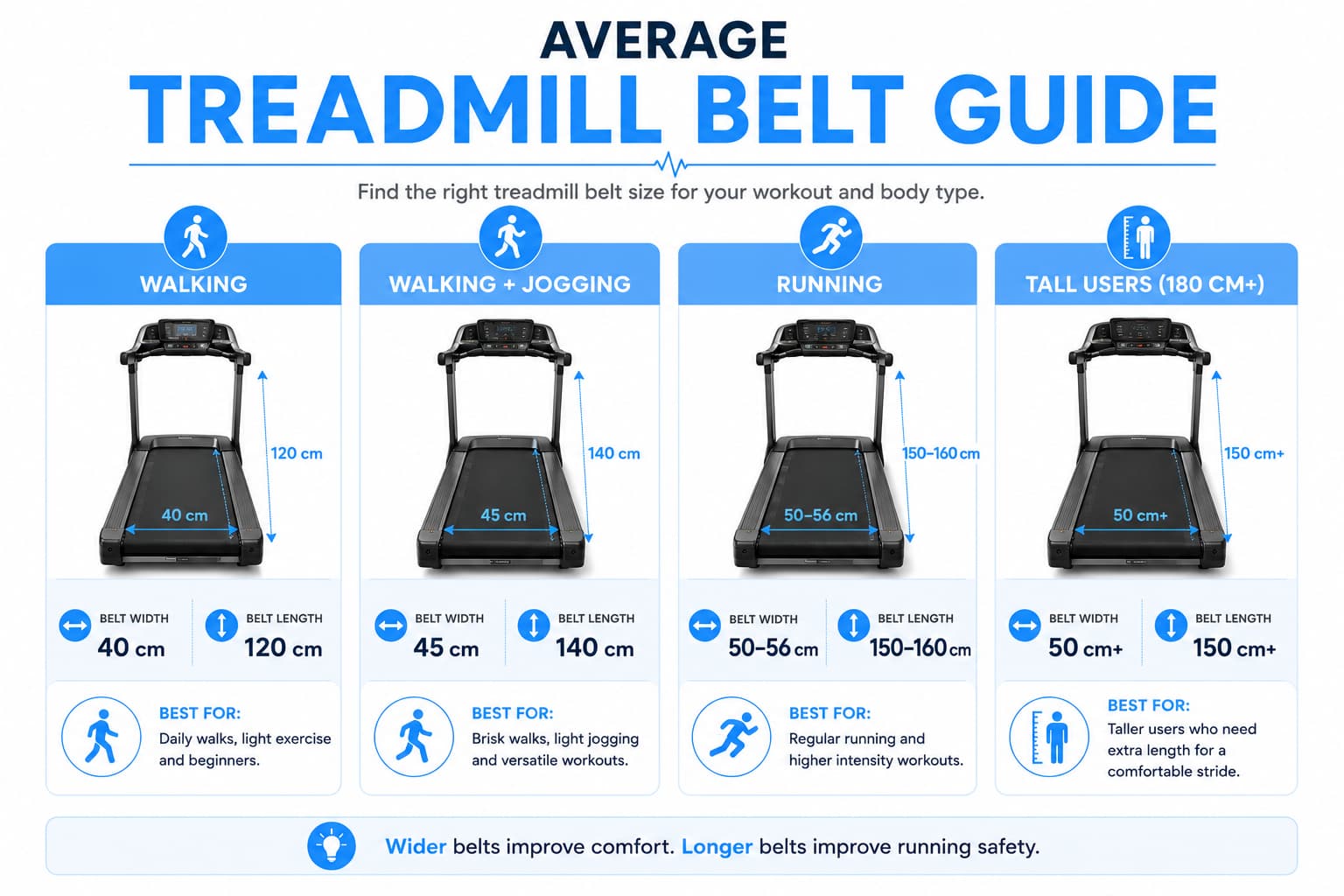
The average treadmill belt size is approximately 51 cm wide and 152 cm long (20” × 60”).
This size has become the standard for many home treadmills because it gives most users enough space to walk, jog, or run comfortably. It is especially popular for runners and taller users who need extra room for a longer stride.
The 51 × 152 cm belt size is common because it offers a good balance between comfort, safety, and space-saving design.
Different treadmill types can vary in size:
- Compact treadmills usually have shorter, narrower belts for walking exercises.
- Folding treadmills are designed to save space but may have smaller running surfaces.
- Commercial treadmills often have larger belts for heavy use and faster running.
If you plan to run regularly or share the treadmill with others, a standard 51 × 152 cm belt is usually the safest and most comfortable choice.
How to Choose the Right Treadmill Belt Size
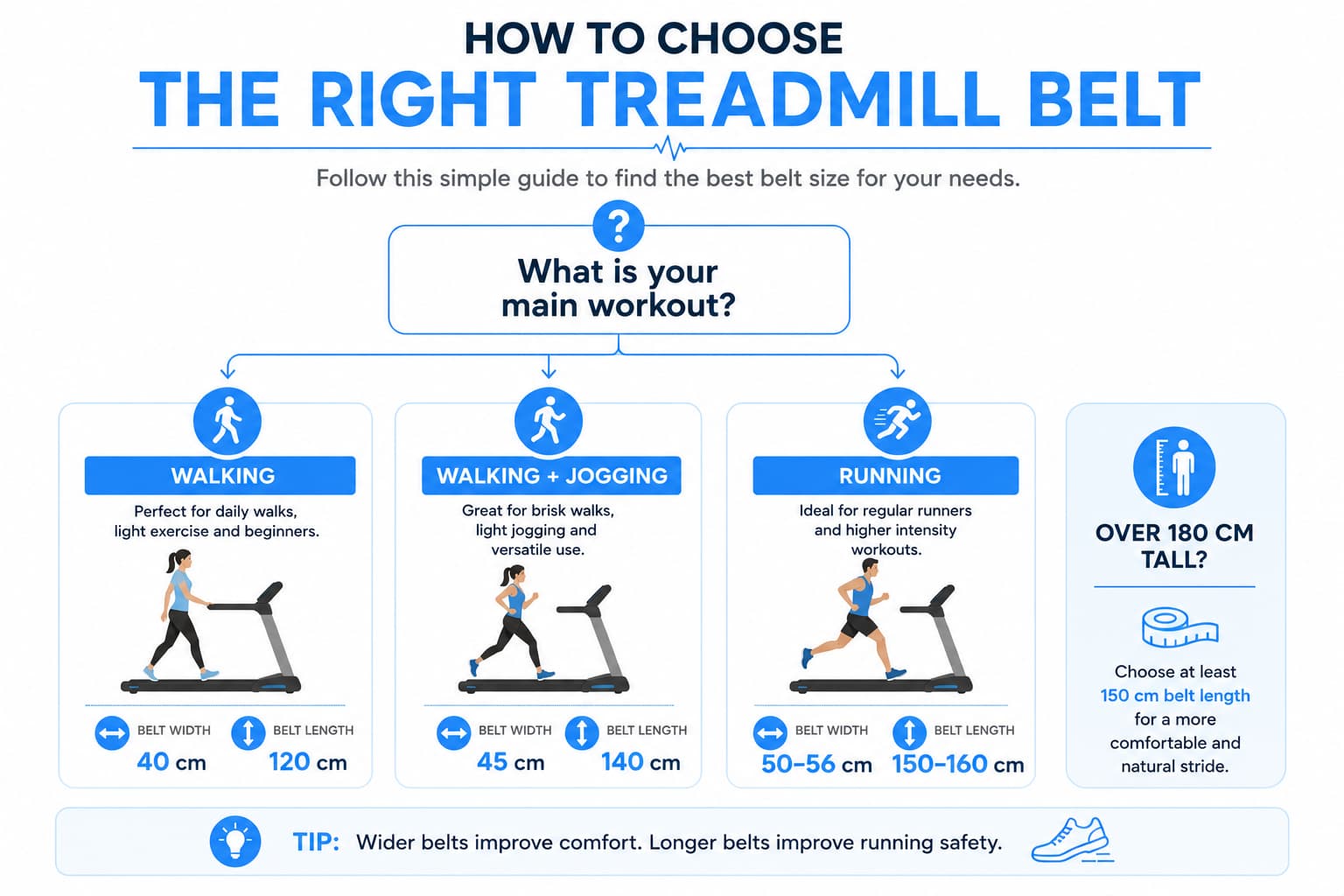
Choosing the right treadmill belt size is easier than most people think. There are really only two things that matter: your workout type and your height.
1. Your Workout Type
Your stride changes depending on how fast you move:
- Walking → short stride
- Jogging → moderate stride
- Running → long stride
Your treadmill belt size affects your workout performance. The faster you go, the longer the treadmill belt should be. A belt that feels fine for walking may feel cramped when you start running.
2. Your Height (Stride Length)
Taller users naturally take longer steps, so they usually need more belt length.
- Under 170 cm → standard sizes are usually fine
- 170–180 cm → mid-range belt recommended
- 180 cm+ → longer belt strongly recommended
If you’re tall and plan to run regularly, don’t compromise on belt length. A longer treadmill belt feels safer, more comfortable, and more natural during workouts.
Best Treadmill Belt Size for Walking
If you mainly plan to walk, you usually do not need a large treadmill belt. Walking uses a shorter stride, so a smaller running surface is often enough.
A treadmill belt size around 40–45 cm wide and 120–130 cm long works well for most walkers. These treadmills are often more compact, making them a great choice for apartments or smaller workout spaces. They also tend to cost less than larger running treadmills.
Walking treadmills are ideal for:
- Seniors
- Casual walkers
- Apartment users
- People who prefer light daily exercises
Best Treadmill Belt Size for Jogging
Jogging requires a little more space because your stride becomes longer as your speed increases. A treadmill belt size around 45–50 cm wide and 140–150 cm long is usually the best middle-ground option.
These mixed-use treadmills are versatile enough for both walking and light running, making them a popular choice for families or shared use.
Best Treadmill Belt Size for Running
Running requires the most space and stability. Faster speeds create longer strides, so a short treadmill belt can feel unsafe or cramped.
For running, look for a treadmill belt size around 50–56 cm wide and 150–160 cm long. Taller runners should especially prioritise belt length for a smoother and safer workout experience.
Treadmill Belt Width vs Length
The belt on a treadmill has two key measurements: width and length. Both matter, but they affect your workout in different ways.
Width affects:
- comfort while running or walking
- confidence when moving at speed
- side-to-side movement and stability
A wider belt gives you more room to move naturally without worrying about stepping off the edge.
Length affects:
- stride safety during each step
- ability to run naturally without shortening your stride
- overall running comfort at higher speeds
A longer belt helps prevent overstepping, especially when running fast.
Which matters more?
- Walking: width matters more because the stride is short
- Jogging: both width and length are important
- Running: length matters more to support longer strides and safety at speed
In general, beginners benefit more from width, while runners benefit more from length for safe, natural movement. Choose based on your fitness level and goals for best results always.
Common Treadmill Belt Sizes Explained
Treadmills come in different sizes depending on how they are designed to be used. Looking at real-world examples can make it easier to choose the right fit for your workouts and space.
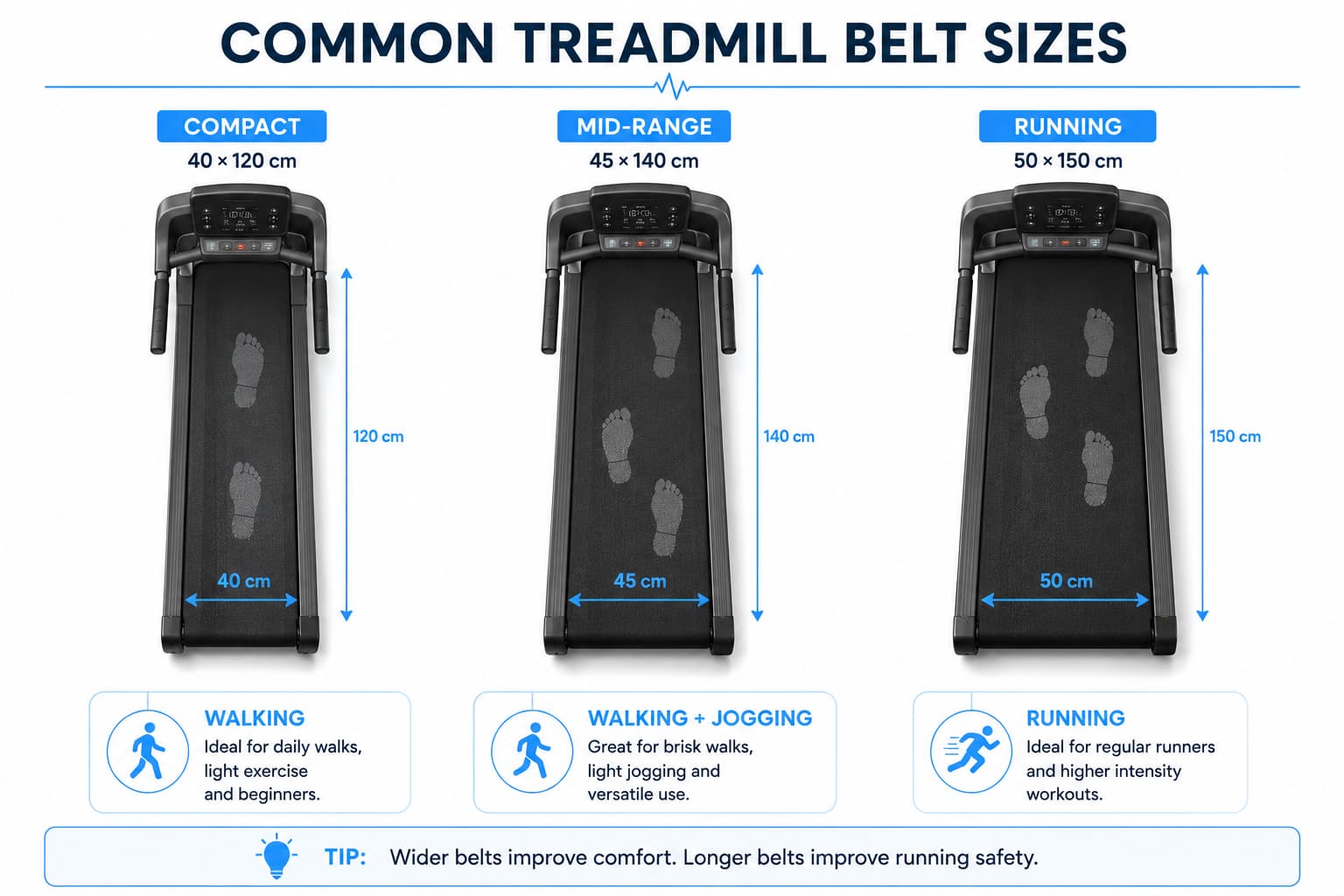
Most home treadmills usually fall into these ranges:
- Compact models → around 40 × 120 cm
These are best for walking and light workouts. Mini treadmills or walking pads save space but can feel cramped for taller users or runners.
- Mid-range home treadmills → around 45 × 140 cm
These are the most versatile options for walking, jogging, and occasional running. They feel more comfortable without taking up too much room.
- Premium running treadmills → around 50 × 150+ cm
These provide the most natural running experience. The extra length and width improve comfort, stability, and safety during faster workouts.
If you are unsure which size to choose, a 50 × 150 cm treadmill belt is usually the safest all-around option for most users.
Common Mistakes When Choosing Treadmill Size
Choosing the wrong treadmill size is more common than you might think. Many people focus only on price or space and forget about comfort and safety.
One of the biggest mistakes is buying a belt that is too short, especially for running. It can feel cramped and unsafe once your stride gets longer.
Other common mistakes include:
- Going too small to save space or money
- Ignoring your height and stride length
- Confusing overall treadmill size with actual belt size
- Choosing compact treadmills for regular running
- Overbuying for walking-only workouts and wasting floor space
Taller users usually need longer treadmill decks for a more natural stride. Meanwhile, walkers often do not need large running treadmills.
Biggest Mistake: Buying a compact treadmill for running may save space at first, but many people regret it later because the belt feels too short, unstable, and uncomfortable during faster workouts.
Final Verdict: What Treadmill Belt Size is Best?
The best treadmill belt size depends entirely on your fitness goals and height, though a 50 × 150 cm deck is the safest all-around choice for most homes.
While walkers can easily save space and budget with a compact 45 × 130 cm belt, jogging requires a mid-sized 50 × 140 cm deck for comfort. If you run regularly or stand over 180 cm tall, prioritising a 150 cm length is essential to safely accommodate your longer, natural stride.
Ultimately, choosing the right belt dimensions ensures you never have to compromise your stride for your space.
Related Questions
1. What is the standard treadmill belt size?
The standard treadmill belt size is usually around 51 cm wide and 152 cm long (20” × 60”). This size works well for most people, especially runners and taller users. It provides enough space for comfortable walking, jogging, and running without feeling cramped during workouts.
2. What is the difference between treadmill size and belt size?
Treadmill size refers to the overall dimensions of the machine, including the frame and console. Belt size only refers to the moving surface you walk or run on. Many people confuse the two, but the belt size is the most important part for comfort and safety during workouts.
3. How much space do you need around a treadmill?
Most treadmills need space and extra clearance around them for safety and easy movement. A good rule is to leave:
- Around 50 cm on each side
- At least 2 metres behind the treadmill
- Enough ceiling height if you are tall or running
This helps create a safer and more comfortable workout area.